You Don't Need To See Everything To Have Seen Paris
You are not going to get the most out of Paris by trying to fit Paris in.
I see this every week, and I want to put it on the table at the very start, because the trip many first-timers are picturing (every monument, every neighborhood, the Louvre and the Orsay and Versailles in 3 days) is the trip that ends with you exhausted, with hundreds of photos on your phone, and very few real memories of what happened in between.
Paris responds badly to a checklist approach, it is the kind of city you let happen to you a little, and the difference between a great first trip and a forgettable one is almost entirely about pace.
I really do get the impulse to rush. The first time I traveled abroad on my own, in New Zealand, I did exactly the same thing. I raced from town to town, terrified of skipping anything, and by the end of every day I was too tired to remember what I had seen. So I am not writing this from a high place, I have been on that side of it.
The 3 Fears Driving You To Rush
There are usually 3 fears feeding the rush, and I think naming them honestly helps loosen them.
"People will judge me if I didn't see X." You're already imagining the conversation back home. "You went to Paris and didn't see the Louvre?"
"I wasted money if I didn't maximize every moment." You spent $4,000 on this trip. Every hour sitting feels like money burned.
"I can't say I've been to Paris if I skip the famous things." There's a checklist in your head. Eiffel Tower, Louvre, Arc de Triomphe, Notre-Dame, Sacré-Cœur. Until you check them all off, you haven't "done" Paris.
These fears are really understandable. The trouble is, they push you to visit Paris by doing the exact opposite of what actually makes Paris what it is.
Parisians sit at lunch for two hours. The long meal, the slow conversation, the second coffee, all of it together is the meal, that is the whole point. The verb flâner (walking with no goal, just to see what shows up) sounds frivolous to many visitors, and it is in fact how the city was meant to be used. It is how you find a small inner courtyard, a bakery you did not plan for, the light on the Seine at six in the evening when the bridges go gold. It is also why, if you spend ten minutes at the Eiffel Tower because you are already thinking about the next stop, you will leave Paris remembering mostly the elevator queue.
What People Actually Remember From Their Trip
When I ask on my newsletter what my readers remember most from their Paris trip, almost no one mentions a monument. They mention the bakery they ducked into when it started raining. The waiter who teased them in broken English. The street they walked down only because their first route was closed for construction. The other tourist they met on the metro who recommended a tiny restaurant in the eleventh. The memories that stick are almost never the ones you ran through.
Standing in front of the Mona Lisa for thirty seconds behind a wall of phones gives you a photo and very little else. An hour at a café, slowly eating a croissant and watching the street, gives you something you will actually tell people about when you get home. There is no real mystery in this, the moments you slowed down for are the ones that print themselves on you.
Choose How You Want To Experience Each Place
A more useful question than “should I see this?” is“how do I want to experience this?”. You do not have to skip the Louvre, you do not have to skip the Eiffel Tower. You decide what shape your visit takes.
At the Louvre, for example, everyone feels they should see the Mona Lisa. The real choice is what comes after. You can wander aimlessly for 2 hours, feeling vaguely obligated, leave with sore feet, and remember almost nothing. Or you can decide before you walk in: Mona Lisa, then the sculpture wing because you love sculpture, then you are done. Or, Mona Lisa, then Napoleon’s apartments because you love nineteenth-century interiors, then you are done. The point is to walk in with one or two specific things you actually want, instead of the entire museum on your shoulders.
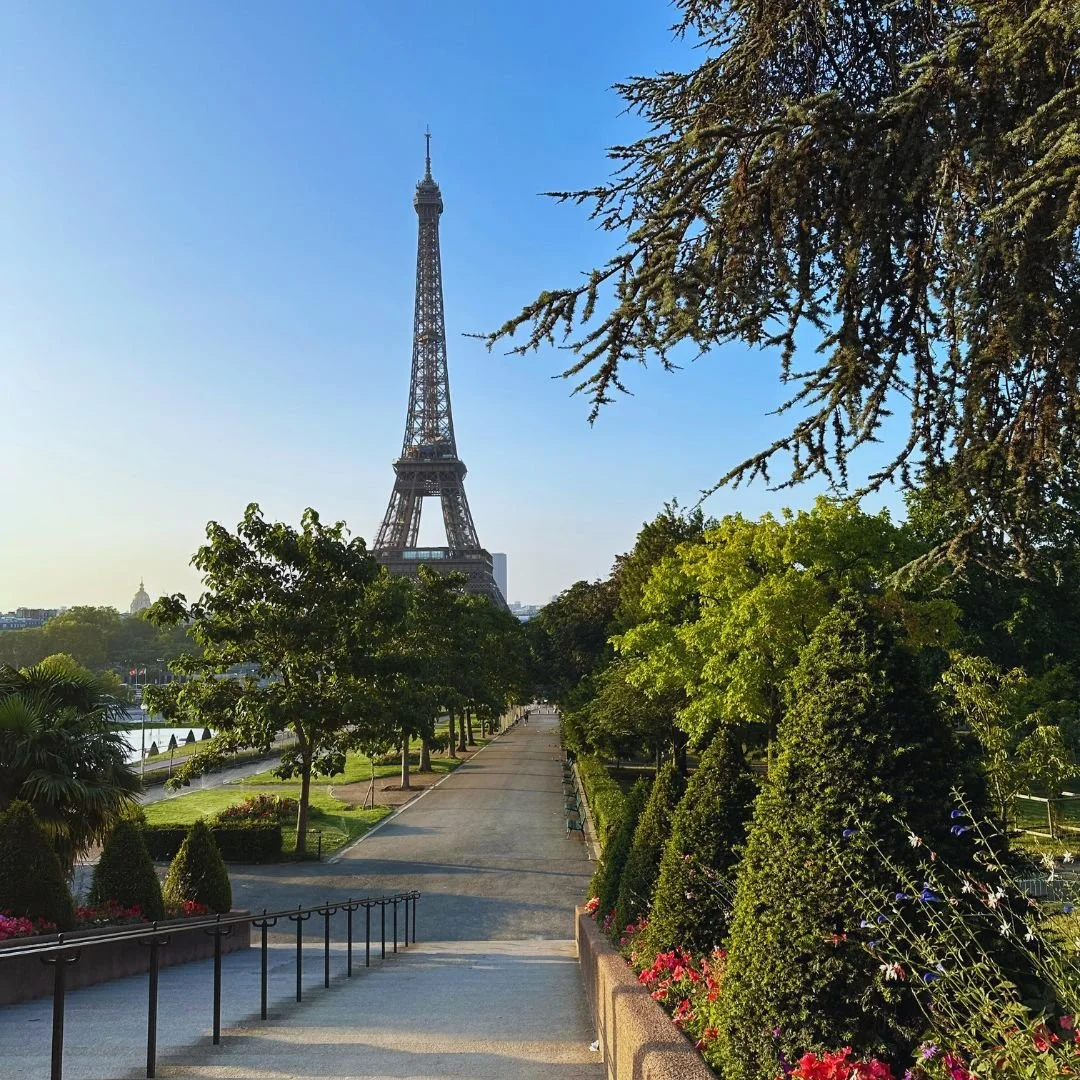
Same with the Eiffel Tower. Is going to the top important to you? Maybe that view is exactly what you came for, in which case go up, take your time, take the stairs back down for the change of perspective at each level. Or maybe what you actually want is to see the Tower in a photo, in which case the view from the Arc de Triomphe is better because you see the Tower in the picture instead of standing inside it. In that case, spend an hour in the Champ de Mars on a blanket, watch the Tower sparkle at the top of the hour after dark, then go up the Arc de Triomphe another evening. Both options are great, the wrong move is doing both because you felt obliged.
There are roughly 5 shapes a monument visit can take, and you can pick a different one for each monument depending on your energy and what you actually care about:
The quick visit: 15 to 30 minutes, mostly to see it and take a photo.
The targeted dive: 1 to 2 hours, going inside with 2 or 3 things you specifically want to see.
The atmospheric stay: 30 minutes to an hour, sitting nearby and watching the place breathe.
The exterior visit, where you skip the inside entirely.
And the full immersion: 2 to 4 hours, where you let yourself wander.
None of these is more “real” than the others, the right one is whichever fits the day, the place, and YOU.
What It Actually Looks Like
To make this concrete, here is what a slowed-down day could look like:
Breakfast at Le Flore en l’Île, lingering at the table with a coffee for an hour or so.
A walk along the Seine afterward, no goal, stopping when something catches your eye.
45 minutes at Notre-Dame and the square around it.
Then Sainte-Chapelle, taking your time with the stained glass, another 45 minutes.
A long lunch at Les Deux Palais, an hour and a half, treating the meal as an actual activity instead of a fueling stop.
The Invalides and Napoleon’s tomb in the afternoon at your own pace, 2 to 3 hours.
A Seine river cruise toward the end of the day, where you sit, rest, and watch the city pass.
Dinner at Crêperie des Pêcheurs.
Notice what is built into that day, a breakfast that breathes, time to wander, a real lunch, a cruise where the only job is to watch.
A small thing that helps me is to keep a tiny notebook on you. You can buy one on day one (great souvenir btw). Each evening, before you fall asleep, write down the small moments that stuck, the waiter who teased you, the light on the Seine that evening, the conversation at lunch, the smell of a bakery you walked past, the kid in the sculpture courtyard at the Louvre who was trying to climb a marble lion. Writing the moments down forces you to look for them the next day, because you know you will be looking for them again at night, and that alone changes how you walk through the city.
Planning This
Bref, you do not need to see everything to have seen Paris. The pauses are where the trip actually happens, and the day on which you only saw three things slowly will be the day you talk about a year later.
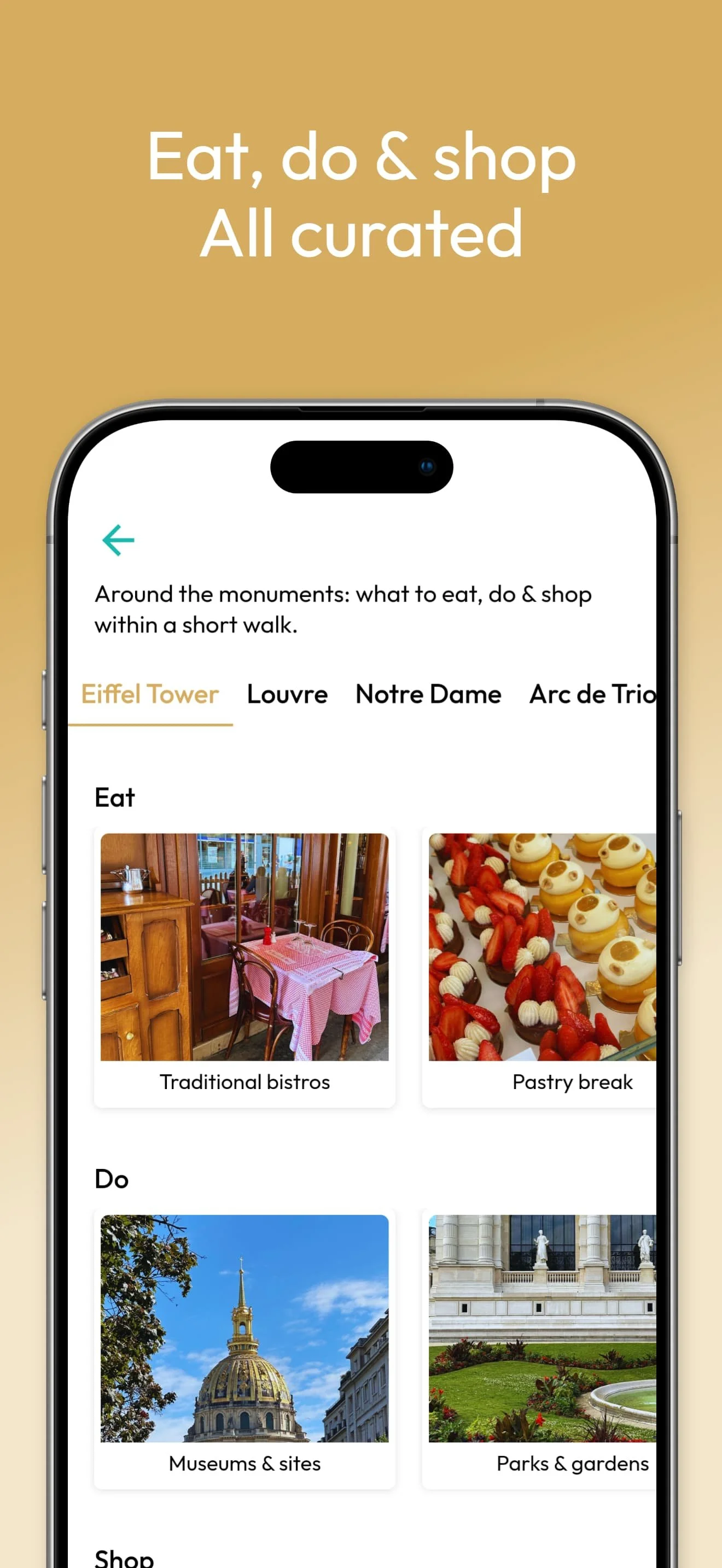
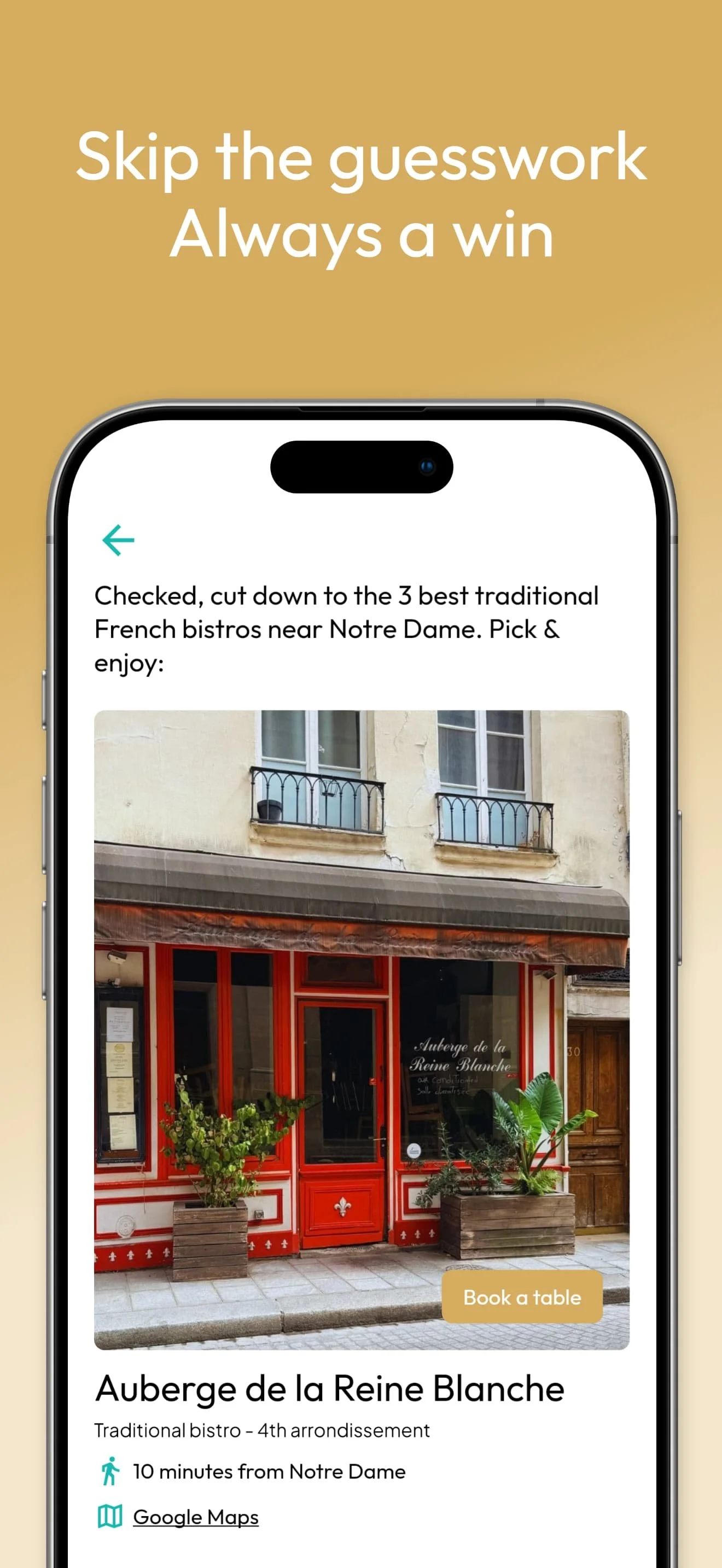
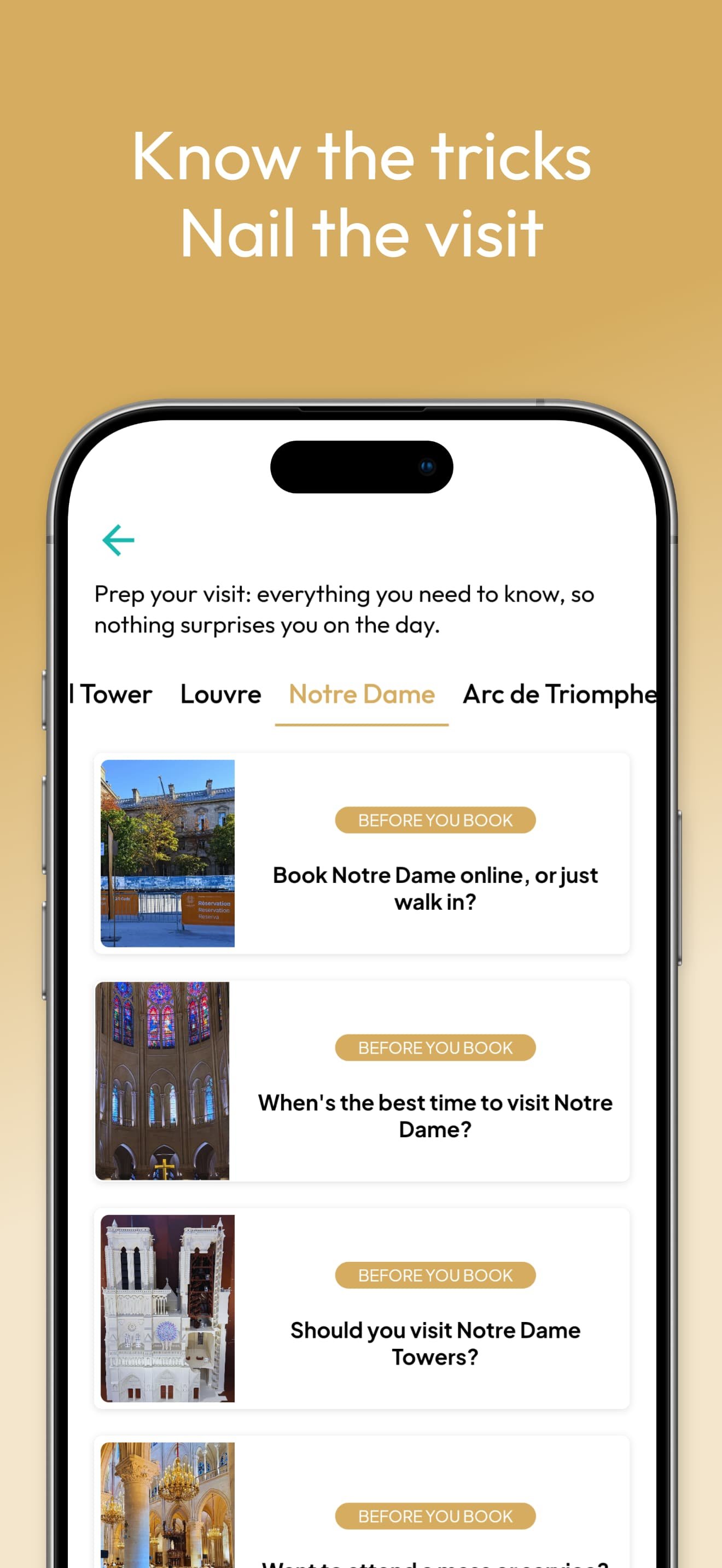
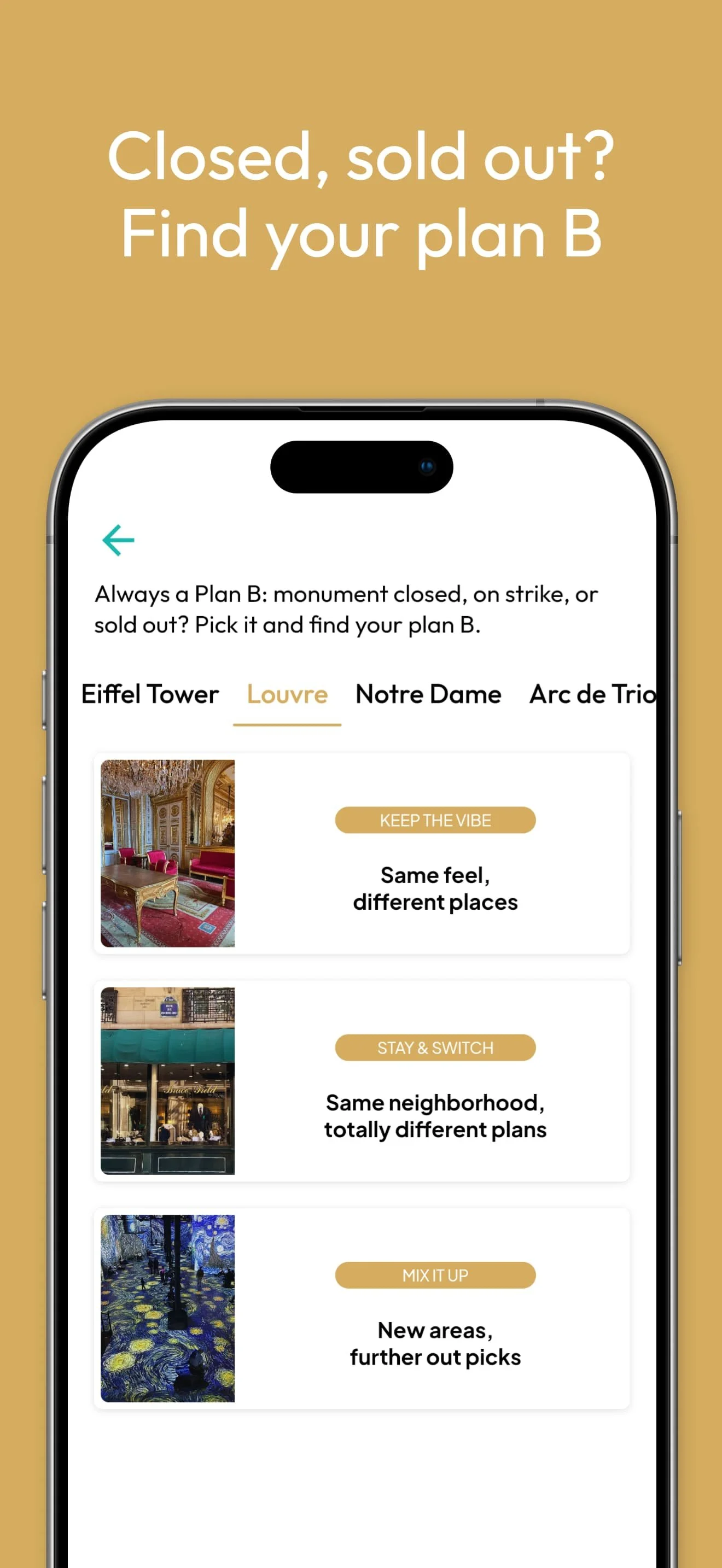
You still need to know what is around each monument, of course, where to eat after a morning at the Louvre, where to sit when your feet hurt, what is worth doing if you finish earlier than expected. That is what Paris on the Spot app is for, the app organizes recommendations by monument and by neighborhood, so when you finish at the Louvre you have a short, tested list of restaurants nearby, a short list of what else is worth your time around there, and you decide. You are still planning your own trip, you just have better information on hand when you need it.
If you want a structured first trip with 2 or 3 big monuments and a lot of breathing room between them, build that. If you would rather skip the inside of the Louvre entirely and spend most of your time wandering and eating, build that instead. Both are great first trips, the wrong one is the one you do because you felt you had to.
PS: if this was helpful, you might also like the article on the 3 questions every first-timer has about Paris.
Planning a trip to Paris? I made an app for that.