Visiting Paris From A Small Town: What To Actually Expect
Paris will be different from what you know. Genuinely different, and if you come from a place where you drive everywhere, where people smile at strangers, and where a crowded parking lot is the closest thing to a real crowd, that difference will feel big at first. That's completely normal. What matters is knowing what to expect! Here are the 4 things I think matter most to know if you're visiting Paris for the first time and come from a small town.
Getting Around: The Metro Is Manageable
The number one concern I hear from first-time visitors is the metro. If you've spent your whole life in a car, the idea of navigating an underground network in a foreign city, in a foreign language, sounds daunting. But here's what I want you to know: it is very manageable.
Bonjour RATP app is the one I recommend, because it does something Google Maps doesn't do quite as well: it tells you which exit to take once you arrive at your station. This matters more than you'd think. Bigger stations have several exits, numbered, and coming out the wrong one can leave you confused and turned around before you've even started walking. The Bonjour RATP app takes that guessing game away. If you prefer to stick with what you already know, Google Maps works fine too.
The other thing I want to say: don't be afraid of getting it wrong. Last week, I took the wrong line myself because 2 lines share the same platform and I wasn't paying attention. It happens. You get out, you re-read the signs, you try again. Budget a little extra time for your journeys, especially in the first couple of days. You're on vacation, not a commute.
One practical warning while we're here: avoid Chatelet-Les Halles station if you can. It is one of the biggest interchange stations in Paris, a sprawling underground maze where even Parisians get turned around and frustrated. If your route takes you through it, see if the Bonjour RATP app suggests an alternative. It often does. Sparing yourself that station is genuinely good advice.
And if you're ever unsure on the platform, just ask. Say "bonjour," show someone your Bonjour RATP app to check you're headed the right way, and they will help you. People waiting for the metro have a moment, so don’t hesitate! It actually happens to me all the time: tourists on the platform or already on the train, checking they're going the right way.
Prepare Your Body While You Prepare Your Itinerary
This is the one thing most people underestimate, and I say this with care because it makes a real difference to how much you enjoy the trip. Paris is a walking city, proper, full-day, on-your-feet-for-hours walking. Before my trip to Argentina, I knew I'd be visiting places at altitude, which would stress my cardio in a way I wasn't used to, so I started cycling 10 minutes every evening, a few months before leaving. It wasn't much, but on arrival I was noticeably more comfortable. I'd encourage you to do something similar for Paris. Start walking 3 to 4 months before your trip, progressively increasing how much you do each day. You'll arrive with legs that are ready, and you might find it's a habit worth keeping!
And please, buy your sneakers early. Not the week before you leave, but at least a month ahead, so you can wear them in and have them already shaped to your foot by the time you arrive. Blisters on day two of a Paris trip are not fun, and they are entirely avoidable. On the shoe question more broadly: comfort first, always. That said, if you want to blend in a little, white classic sneakers are both comfortable and very much in keeping with how people dress here. You'll notice that Parisians, contrary to the elegant stereotype, are very much in sneakers too. Veja is a brand a lot of Parisians love, for what it's worth.
Parisians May Seem Annoyed: It Has Nothing To Do With The Tourists
I want to address something that comes up a lot, because I think it genuinely affects how people feel on their trip. Parisians can seem cold, rushed, even unfriendly. Yes, we do move quickly. We have children to pick up, meetings to get to, a metro to catch, an ordinary life happening at full speed. It's the same energy you'd find in New York for example.
The tricky part is that when you're already a little out of your comfort zone, in a foreign country, unsure of the codes, a neutral look from a bakery cashier can feel like disapproval. I know this feeling well. When I first moved to Colombia, I spent weeks convinced people were reacting badly to everything I did, when in reality I was just reading cultural signals I didn't fully understand yet. The looks, the pace, the absence of automatic smiles to strangers, none of it is hostility. It is just a different way of being in a public space.
And here's the thing: almost everyone who visits Paris says the same afterwards. Once you actually interact with someone, ask for directions, order at a café, need help, people are genuinely kind. Some Parisians just naturally frown. So don't over-interpret. Don't take the baker's expression personally. It's cultural adjustment, and it passes quickly.
The Crowds: This Is Something Else
Parisians being in a rush is one thing. The sheer volume of people is another. If you come from a small town, nothing really prepares you for it. Paris has over 2 million inhabitants, and that's before you count the tourists. On a busy Saturday, some central streets feel like a slow-moving river of people.
On the metro, peak hours hit hard: 8 to 10 in the morning and 5 to 7 in the evening. During those windows, trains are packed in a way that might genuinely surprise you. If you can, shift your visits to avoid those slots. Leave your hotel a little earlier, or wait until mid-morning to head out. That said, let's be honest: the Paris metro is heavily used all day. Outside peak hours it's more comfortable, but don't expect empty carriages.
One thing almost nobody warns you about: a rainy weekend in Paris. The logic goes like this. On dry days, Parisians walk, cycle, and use their bikes far more than you'd expect. Paris has embraced cycling in the past few years, and on a clear day, the streets reflect that. But the moment it rains on a Saturday or Sunday, everyone moves back to the metro and the buses at once. The already-full system becomes something else entirely. If you're caught in it, stay calm, wait for the next train if the first is too full, and maybe adjust your afternoon plans.
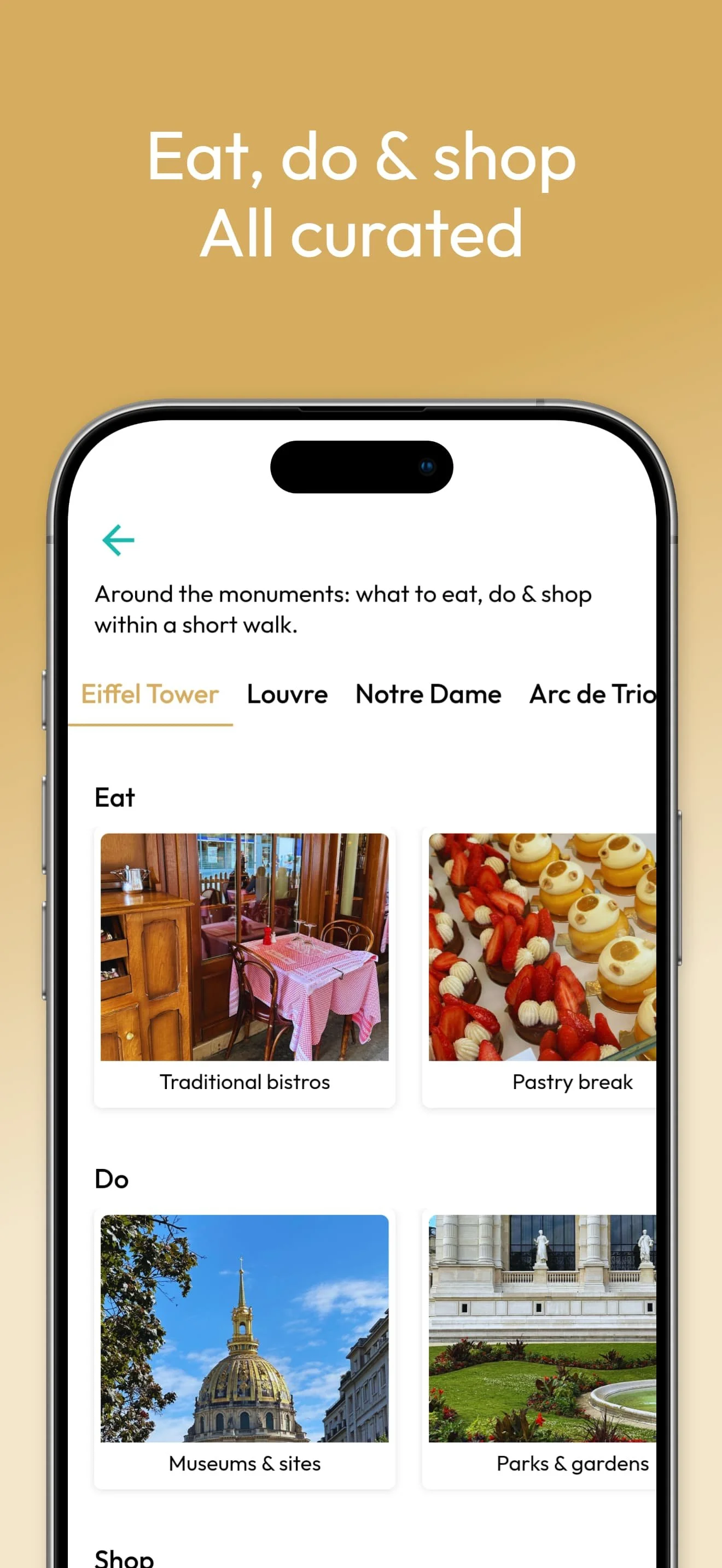
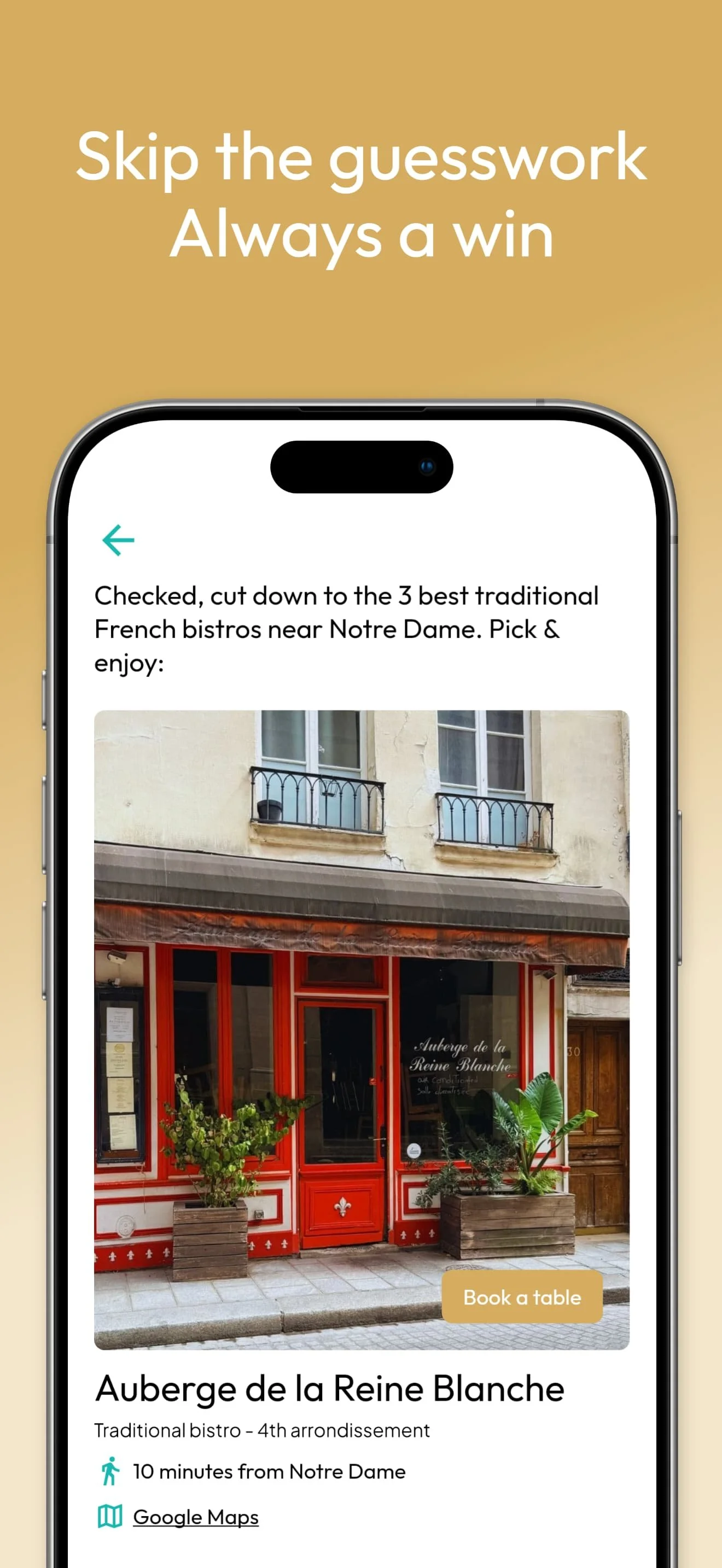
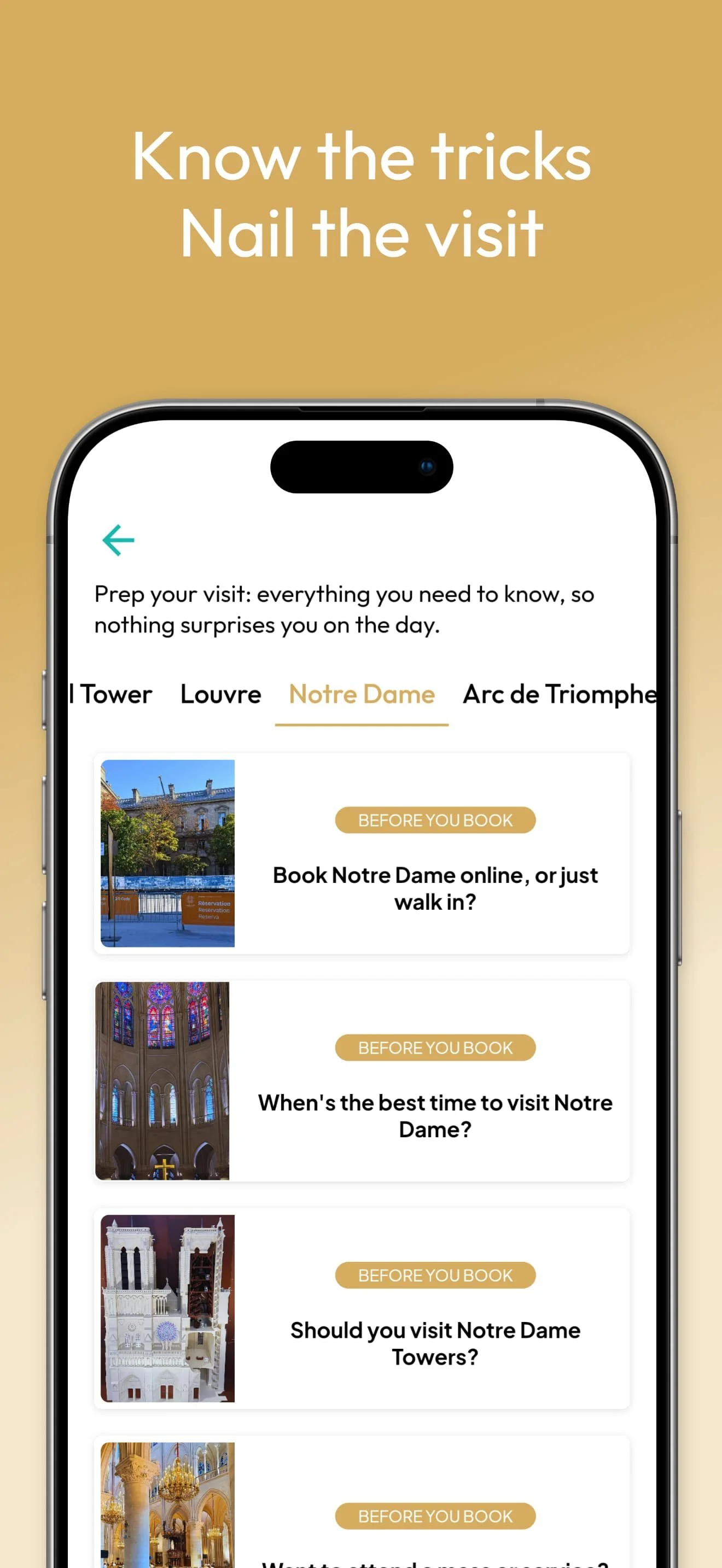
At the monuments, the queues are part of the deal. It's just how it works at the Eiffel Tower, at the Louvre, at Versailles… Coming prepared turns that waiting time into something manageable rather than miserable. A book, if you're the kind of person who reads. Snacks, always. Headphones and a podcast or playlist if you're traveling solo. If you're with kids, a small game or activity goes a long way. And if you want to actually use the time well, Paris on the Spot app has tips about each monument. You can read them while you wait, and arrive at the entrance already knowing what to look for once you're inside.
Walk, Look Up, There's Always Something Beautiful
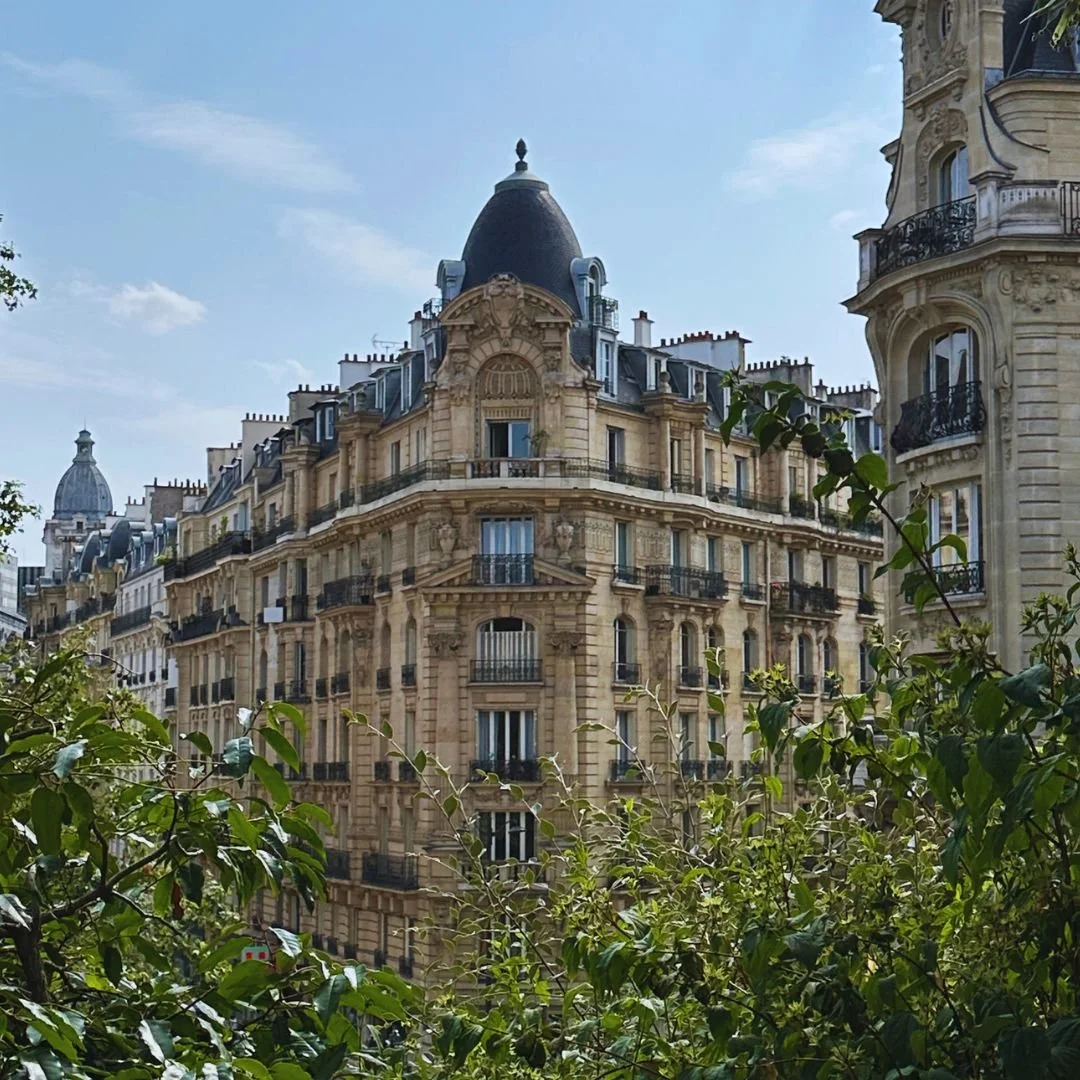
The tourist zones in Paris are more compact than you might imagine. If you've been to New York, Paris will feel manageable in comparison. And while the metro is useful, especially for longer distances, there is a real case for walking more than you think you need to. Taxis and Ubers get you there fast, but they take something away from you: Paris is an architectural city, meaning almost every street has something worth noticing, a carved facade, an unexpected courtyard, a tiny square that isn't on any list.
One thing I'd also suggest, and I do this myself when I have time: take the bus instead of the metro. It's a little slower, yes, but you see the city. You watch the streets change, the buildings, the people. The key is timing: mid-morning or mid-afternoon, not during rush hours when buses get packed and the experience becomes something else entirely.
There is something very Parisian about slowing down and simply being where you are. Sitting at a café for 45 minutes with no particular agenda. Taking a route slightly longer than the most direct one because the street looks interesting. It sounds simple, but it is honestly a big part of what makes a Paris trip feel like a Paris trip rather than a series of monuments checked off a list.
Bref, Paris will ask you to move differently, navigate differently, and read people differently. That's part of it. Come prepared, come with comfortable shoes, and leave the anxiety at home. The city will take care of the rest!
If you found this blog post useful, you might also enjoy: The 6 Best Food Apps for Your Paris Trip.
Planning a trip to Paris? I made an app for that.