Transport Strike In Paris: How To Plan Your Day
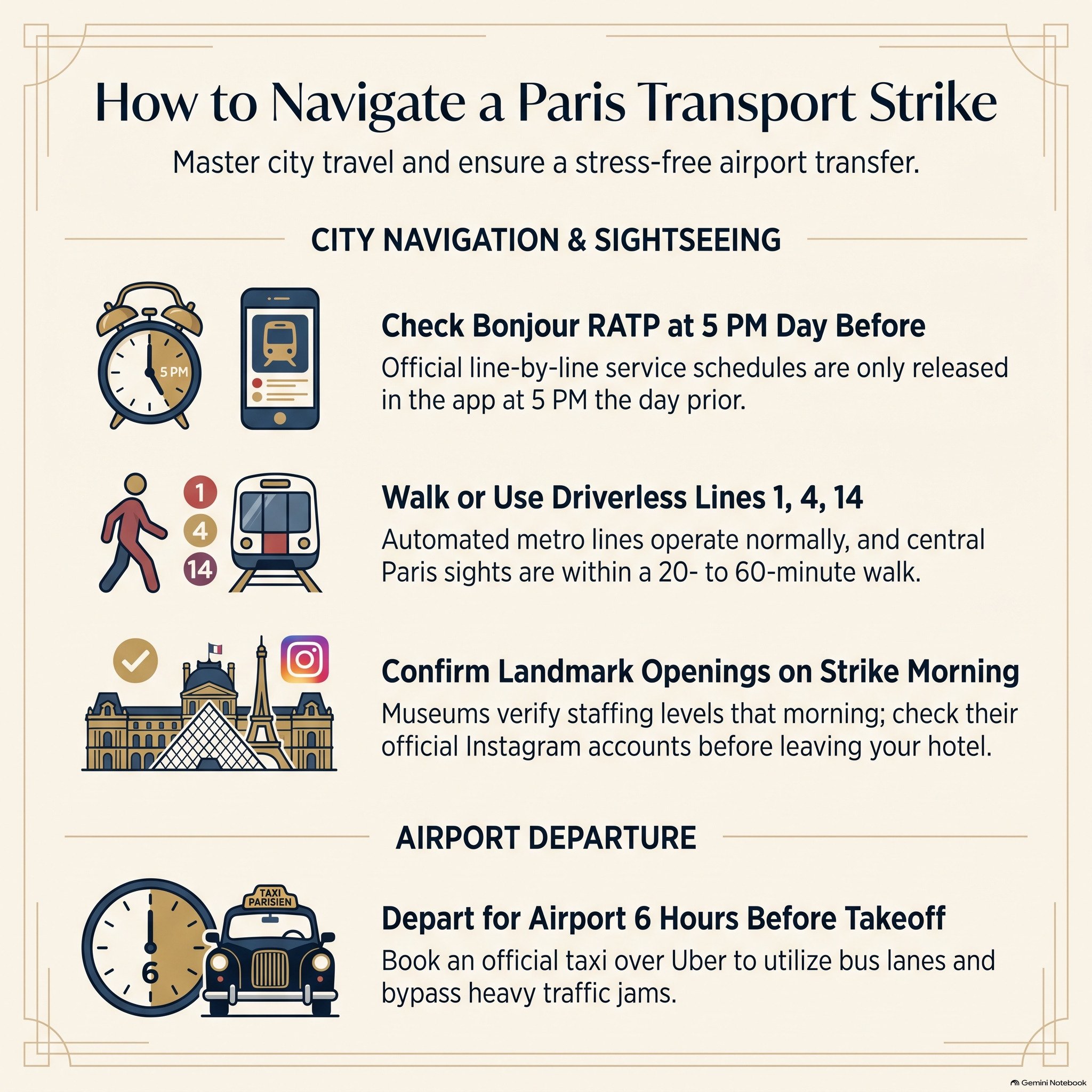
You just heard there's a transport strike in Paris on one of your travel days, and you're wondering if your plans are about to fall apart. I understand, it's stressful, especially on a first trip! The good news is that it's simple to handle. Check the Bonjour RATP app the day before at 5pm, because that's when you'll see which metro, RER, bus and tram lines are running. If you fly that day, leave 6 hours before takeoff. And for the rest of the day, plan to walk more than usual. With that, a strike day becomes a slower day in Paris, and you can still have a very good one. Here is the infographic; more details in the blog post below!
What A Transport Strike In Paris Means For Tourists
For your trip, a transport strike in Paris simply means fewer metros, RERs, buses and trams for the day, so getting around takes a little longer and needs a bit more planning. Strikes are part of life in France, and Parisians are used to them. On a strike day, the city keeps going, cafés and shops stay open, and most people just change their route or walk more than usual. You may also hear about protest marches on the same day. They're very common in France and usually peaceful, and they take place in a few specific areas away from the main sights, so there's nothing to worry about (more on that at the end).
Where Do You Find Out Which Metro Lines Are On Strike In Paris?
You find out the day before the strike, at 5pm, in the Bonjour RATP app, and it's useless to search before that, because the information comes out in three steps.
First, the strike date is announced a few days in advance. At that point, nobody knows which lines will be affected or whether it will be a big strike or a small one, so searching everywhere for answers that don't exist yet will only make you anxious. You can enjoy your trip until the next step!
Then, the day before at 5pm, the forecast comes out line by line. Bonjour RATP is the official Paris public transport app, and for each metro, RER, bus and tram line, it shows how much of the normal service will run (for example, one train out of two, or one out of three). It also covers the RER to Versailles. I recommend you download it before you leave home, so you're ready.
Finally, on the morning of the strike, museums and monuments find out who came to work (more on that below), and protest routes are published.
CDG And Orly Airports During A Paris Transport Strike: Arriving And Leaving
If you're flying out, leave your hotel 6 hours before takeoff instead of the usual 4, and if you're landing, expect longer waits for trains and taxis. In both cases, a taxi is a better choice than an Uber, and Orly is easier than CDG.
On a strike day, leave your hotel 6 hours before takeoff instead of the usual 4, and if you can, take a taxi rather than an Uber. The usual rule for an international flight is to be at the airport 3 hours before takeoff, which is why most people leave their hotel about 4 hours before. On a strike day, you add 2 extra hours. Why? Because with fewer trains, many more people take a taxi or an Uber, so cars are harder to find, and the roads get much busier. And the Paris region already has a lot of traffic jams on a normal day!
If you fly from Charles de Gaulle, which is where most international flights land, keep in mind that the RER B, the train line to the airport, is often part of the strike (not always, but often). There's no real backup for this airport, so this is where the 6-hour rule matters most.
If you fly from Orly, good news, it's the easiest airport on a strike day. Metro line 14 goes there, and it's a driverless line, so it usually keeps running. The only catch is that you still need to reach a line 14 station from your hotel, and your local line might be affected.
When you leave from Paris, book your car in advance. I have to say that booking doesn't guarantee the car arrives on time, because of the traffic and because drivers can get stuck on their previous ride, but it gives you a much better chance. And choose a taxi rather than an Uber when you can. Paris taxis are allowed to drive in the bus lanes, and Uber drivers aren't, so on a day with heavy traffic, that can save you some precious time.
When you land, check the RER B in the Bonjour RATP app. If you prefer a taxi, expect a longer line than usual, and if you book a ride in advance, be patient, as it may take longer to get to you. It will probably be a long day, that's true, but you'll get there.
Will A Strike In Paris Affect Your flight Or Train?
It can, and if it does, your airline or the French rail company (SNCF) will email you, so there's nothing to do in advance. This includes trains leaving the Paris area, like a TGV to Bordeaux or the south of France, or a regional train to Normandy or Champagne. Emails sometimes arrive late or land in spam, though, so I'd check their app the evening before, just to be sure.
How To Get Around Paris During A Transport Strike
The best way to get around is walking, along with the driverless metro lines 1, 4 and 14, which usually keep running. Not all lines are hit the same way, so depending on your route, you may barely notice the strike. Check if your plans for the day can follow one of those three lines.
A French law requires a minimum service on strike days, so some trains will run on most lines, but they will be very crowded, and honestly, it's not very pleasant. If I may, when you have the choice, leave the space to Parisians who need to get to work. Taxis and Uber will be busy too, with long waits and slow traffic.
Walking is what most Parisians do on a strike day, me included. Paris is a smaller city than most American visitors expect: from the Louvre to Notre-Dame, it's about a 20-minute walk, and from the Eiffel Tower to the Louvre, about an hour. If your health and your feet allow it, this is my favorite option, and you'll see parts of the city you would have missed underground.
Are Museums And Monuments Open During A Strike In Paris?
Most of them are, but the Louvre, Versailles or even the Eiffel Tower for example can open late, open only some rooms, or close, and they only find out on the morning itself. It depends on which staff come to work that day. They usually post the news on their Instagram accounts, so follow the ones on your list, and you'll know before you leave your hotel.
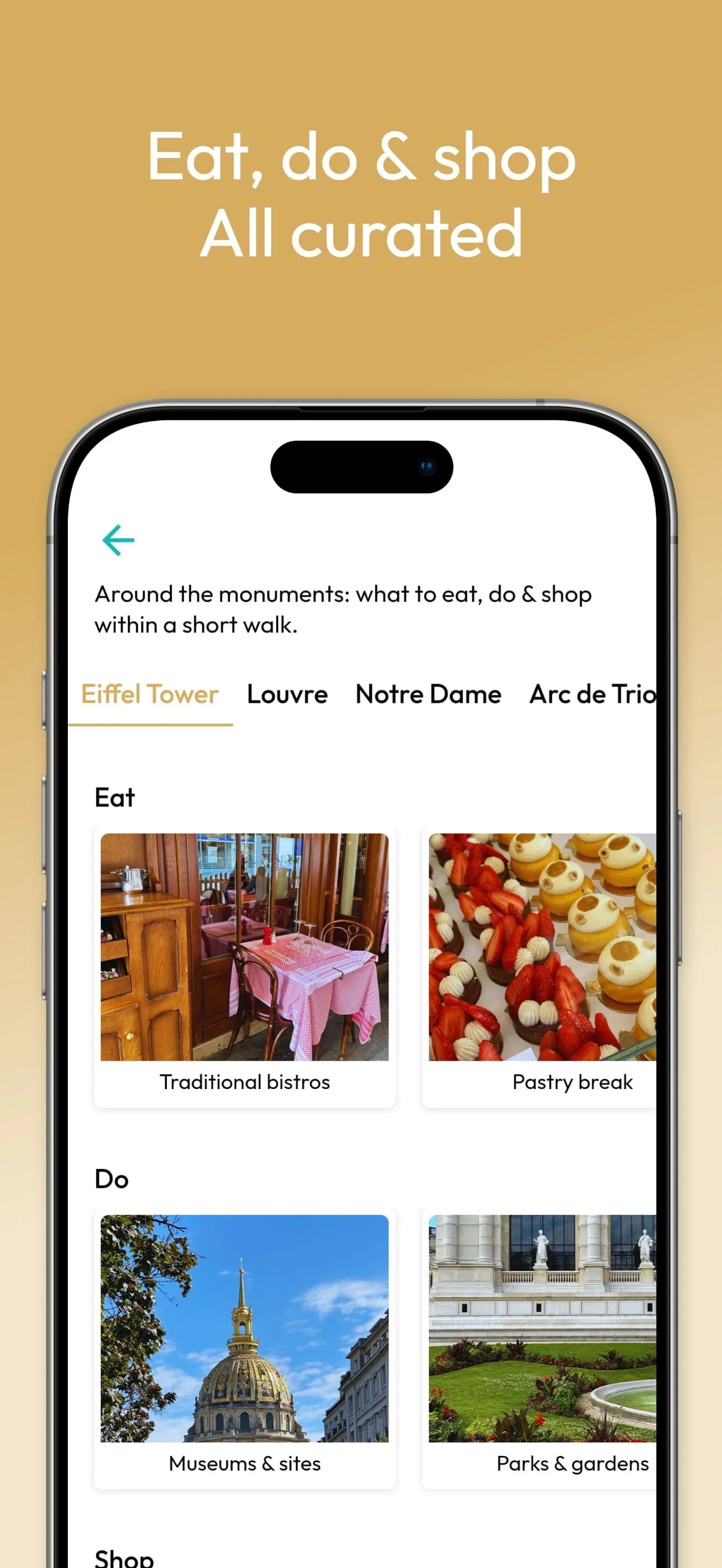
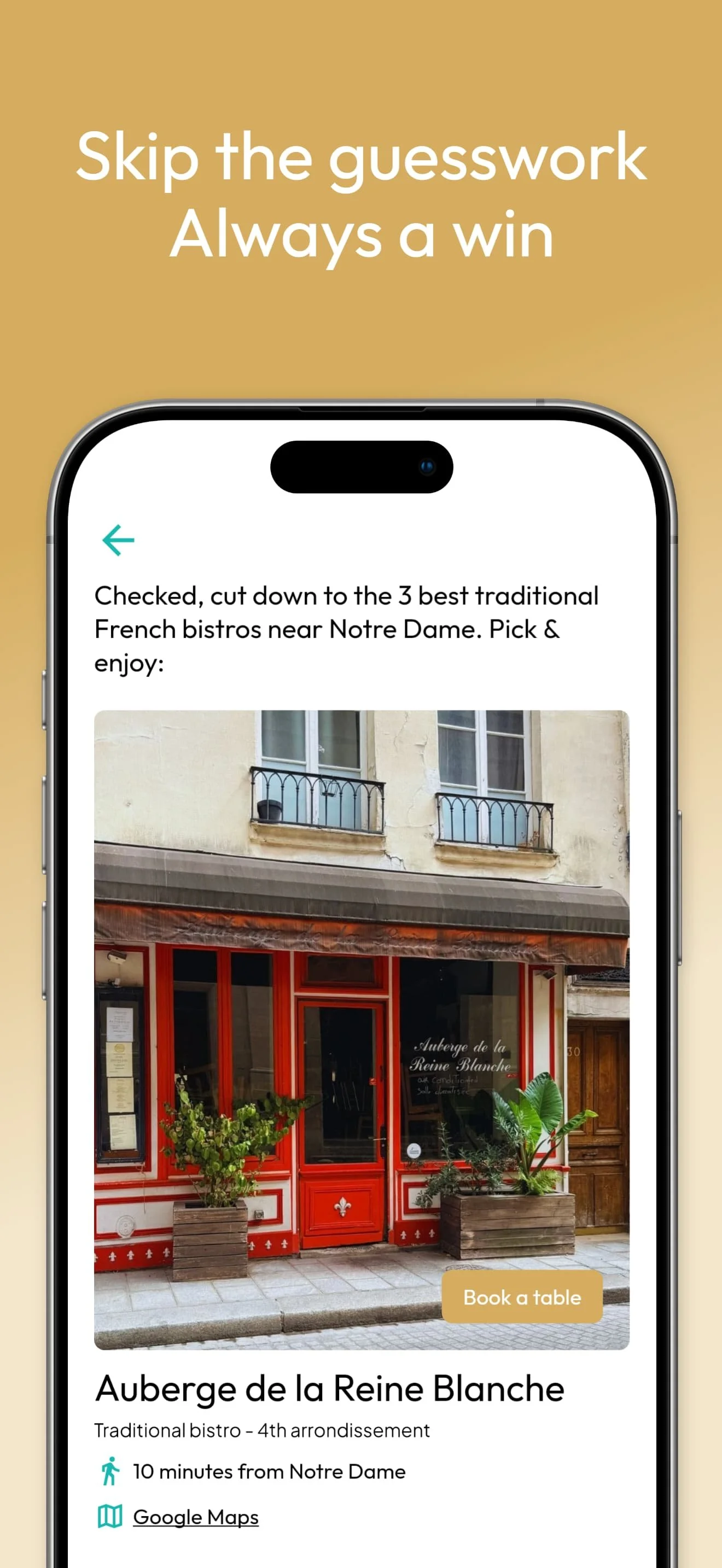
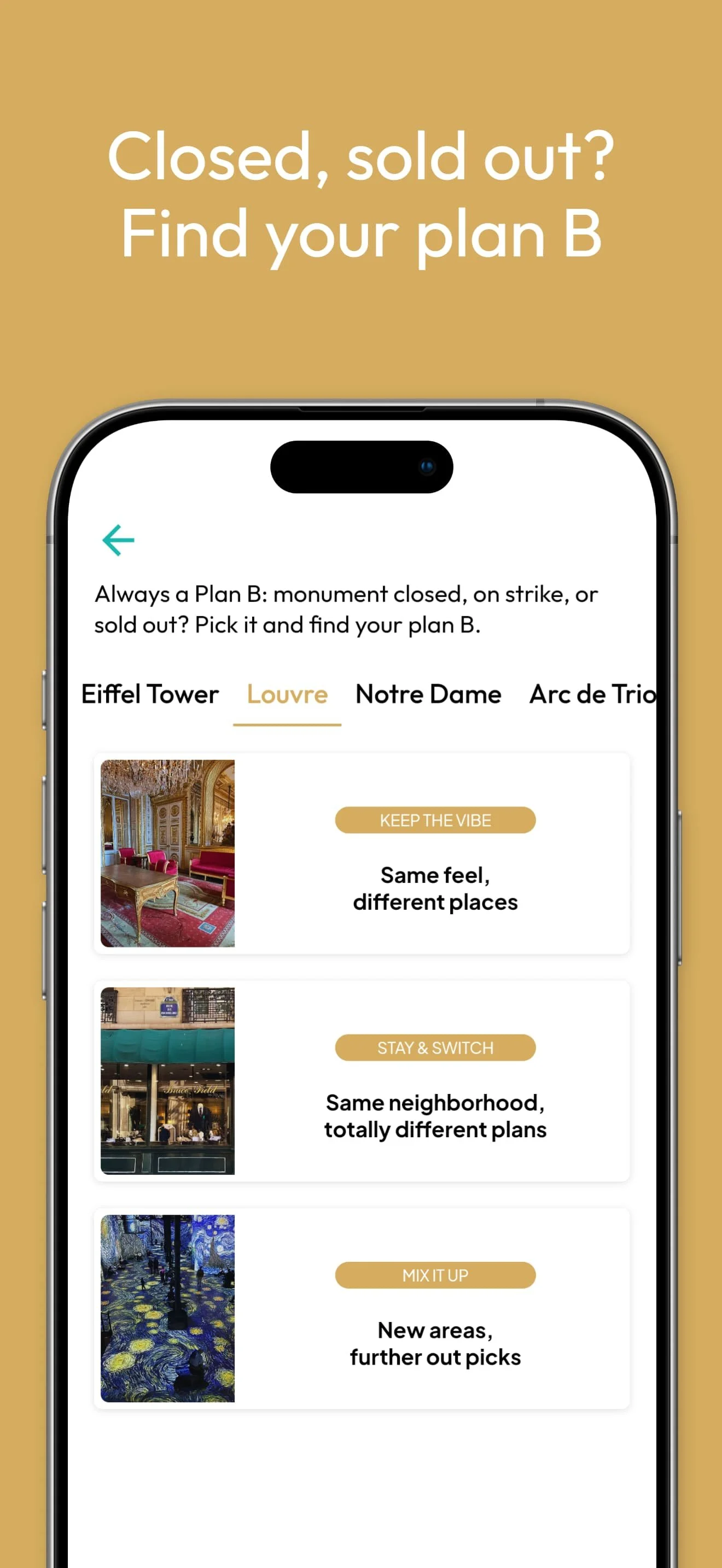
If a landmark on your list is closed, open the Paris on the Spot app (App Store / Google Play). For each monument, I've selected the best plan B options, so you can quickly find something good to do instead ;)
To make your day easier, take a few minutes in the morning to rethink your routes, so you can walk from one place to the next instead of crossing the city. If you haven't booked all your tickets yet, this is a good day to choose activities that depend less on transport and staff, like a shopping session, rather than a museum visit. And if you had planned some shopping in an area far from the rest of your day, change places, and pick shops on your way or close to the places you're visiting. Above all, plan longer walking and travel times between each stop, because that's what will happen anyway.
Are Protests In Paris Dangerous For Tourists?
Most protest marches in France are peaceful and take place far from the main tourist sites, usually around Place de la Republique, Place de la Bastille and Place de la Nation. I know the images on TV can look scary. They usually come from a small group of people on a small part of the route.
If you happen to see a march, you'll probably be surprised by how calm it is. To be completely sure, check the routes on local news sites on the morning of the strike, and plan your walks somewhere else.
PS: my advice for a strike day is the same as for any other day in Paris, always keep a water bottle with you, especially if you plan to do everything on foot (it's one of the 6 things I always have with me in Paris).
Planning a trip to Paris? I made an app for that.