If you want to see beautiful art in Paris without paying a single euro, you have more choice than you think, and the museums that international visitors rate highest are often ones you have probably never heard of! The best-rated free museums in Paris are the Bourdelle Museum (4.81 out of 5), the Carnavalet Museum (4.77) and the Petit Palais (4.75). This ranking comes from the Paris on the Spot Free Museums Study (2026), based on 10,521 Google reviews of 16 free museums, filtered to keep only international visitors.
10 Free Museums in Paris Ranked by International Visitors
The museums are ranked by their average Google Maps rating from international visitors, out of 5 (you will find all the details in the methodology note at the end of this article).
| Rank | Museum | Neighborhood | Average rating (out of 5) | Number of ratings |
|---|---|---|---|---|
| 1 | Bourdelle Museum | Montparnasse | 4.81 | 187 |
| 2 | Carnavalet Museum (History of Paris) | Marais | 4.77 | 1,000 |
| 3 | Petit Palais (Fine Arts Museum of Paris) | Champs-Élysées | 4.75 | 1,779 |
| 4 | Museum of the Liberation of Paris | Denfert-Rochereau | 4.73 | 100 |
| 5 | Curie Museum | Latin Quarter | 4.68 | 152 |
| 6 | Museum of Modern Art of Paris | Trocadéro | 4.54 | 428 |
| 7 | National Archives Museum | Marais | 4.48 | 159 |
| 8 | Fragonard Perfume Museum | Opéra | 4.48 | 442 |
| 9 | Museum of Romantic Life | Pigalle | 4.44 | 203 |
| 10 | Victor Hugo's House | Marais | 4.19 | 335 |
It is very close at the top, so close that the Bourdelle, a sculptor's studio near Montparnasse station, gets as much love from international visitors as the Petit Palais, one of the most beautiful buildings in Paris!
The whole list is very well rated (even the 10th museum scores above 4 out of 5), but the top 5 really stand out, so below I tell you more about each of them: what visitors love and my practical tips.
The Top 5 Free Museums in Paris, Museum by Museum
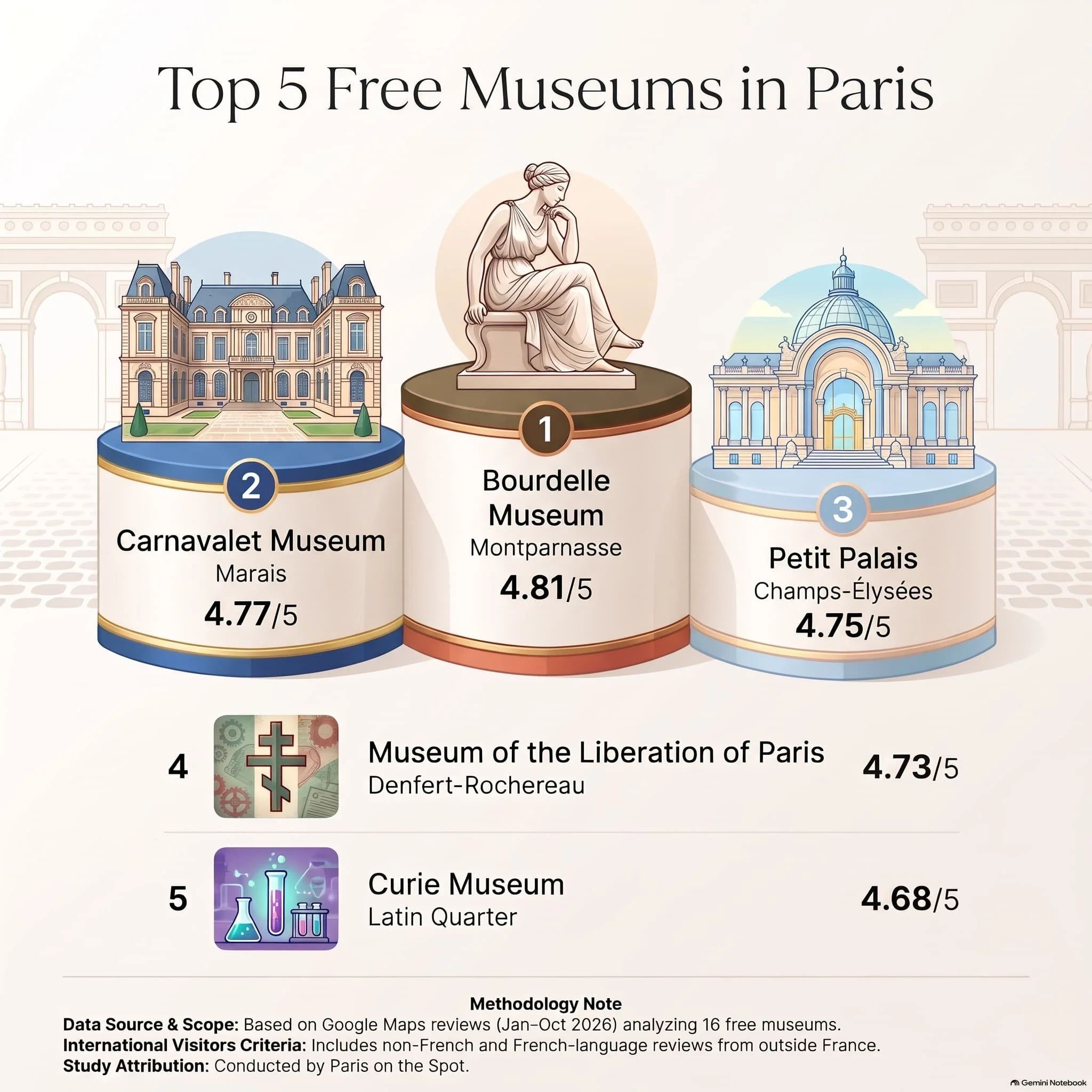
These are the 5 free museums in Paris that international visitors rated highest in 2026, with what they love about each one and my practical tips.
1. Bourdelle Museum, a Sculptor's Studio
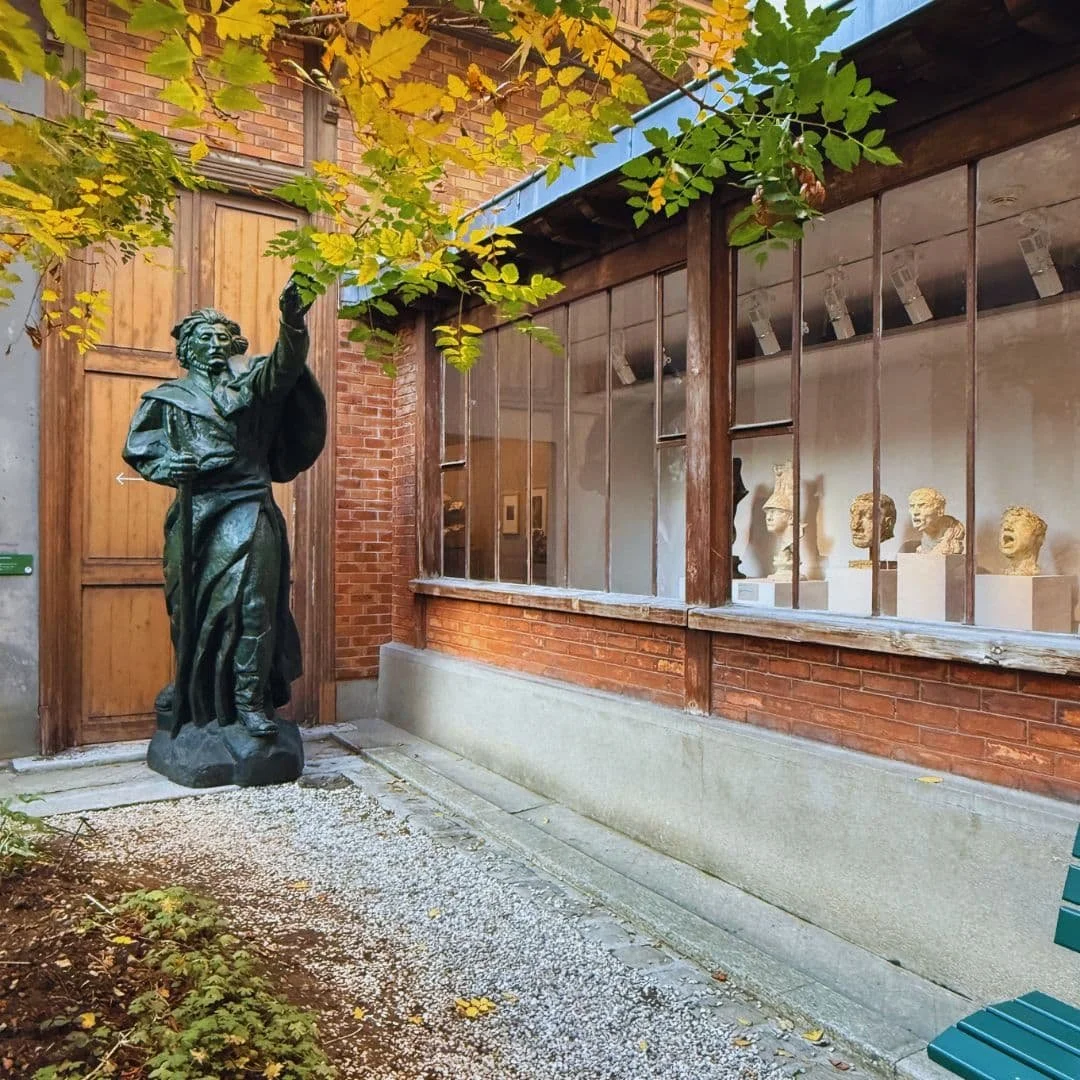
The Bourdelle Museum is the studio where the sculptor Antoine Bourdelle lived and worked. He was one of the great French sculptors of the early 20th century, and he worked alongside Rodin for years before becoming a master in his own right.
It is really interesting to see his real workshop, and also the great variety of sculptures he made. What I find quite unique is that he worked on small pieces as well as monumental ones, and you find these huge works in an impressive hall with an incredibly high ceiling, but also outside, in the garden.
Visitors love the garden, and so do I! Careful, it is the garden of an artist’s studio, so don’t imagine the Tuileries, but it is so quiet that you forget you are in the middle of Paris!
Good to know:
Upstairs, there is a restaurant, very nice for lunch or a drink after your visit.
If you love drawing, bring your sketchbook! You will very probably not be the only one, because it is quite common to see people drawing the sculptures, in the garden or even inside.
It is a 5-minute walk from Montparnasse station, so it works very well if you have some time before a train.
2. Carnavalet Museum, the Story of Paris
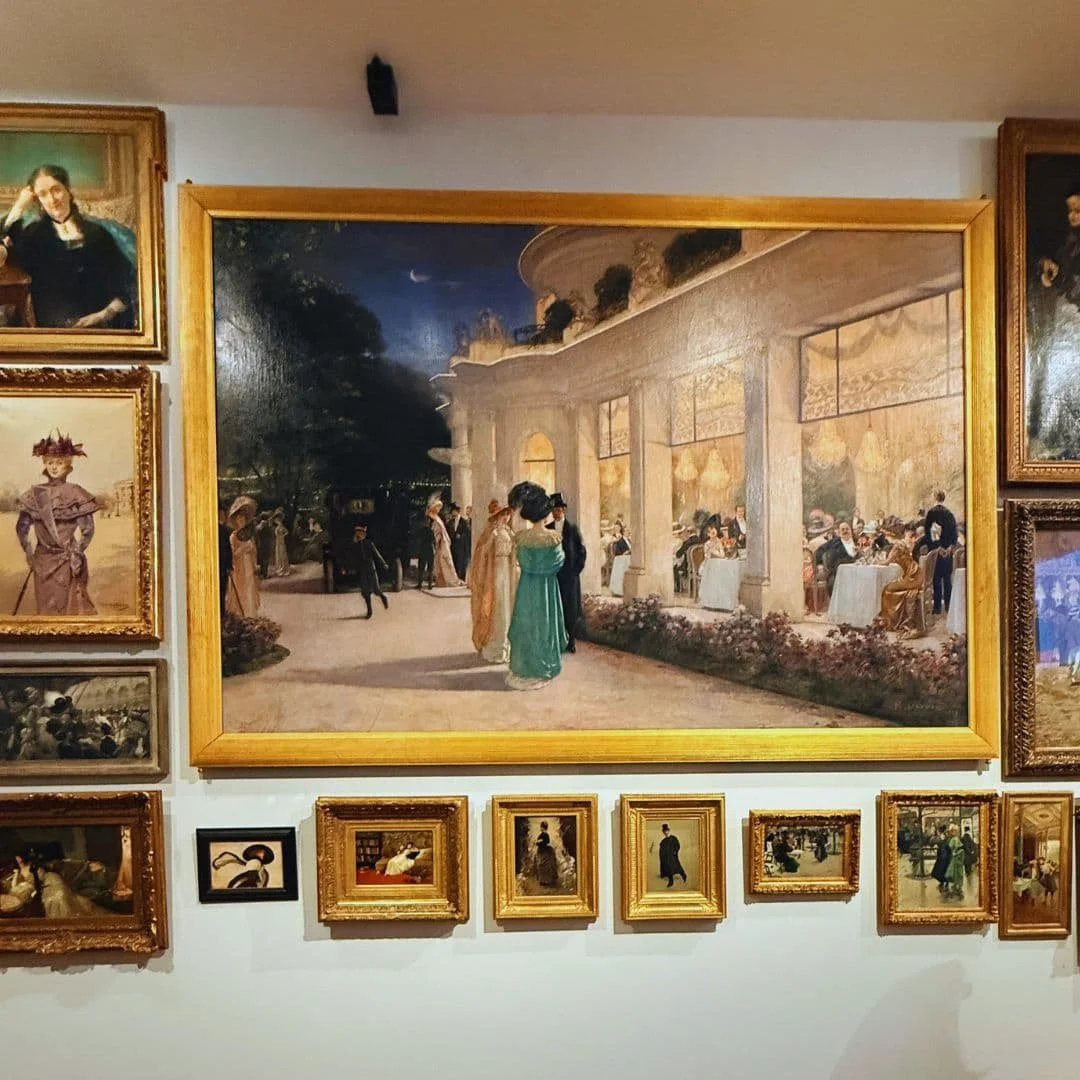
The Carnavalet Museum is the museum of the history of Paris, it covers from prehistory to the 21st century. For me, this is what makes it so interesting: you discover many different kinds of art in one single museum, and it is quite rare to see such a long period of time in one place. You go from prehistoric objects to the Middle Ages, then to 18th-century salons with their decor and furniture, and on to the French Revolution...
The weak point, and visitors say it again and again, is the layout, and I completely agree with them. The museum is a maze of rooms, staircases and floors, and the maps don’t really help: when I went recently, I got lost again and had to ask for help! So don’t hesitate to ask the staff, otherwise you may miss whole parts of the museum. Especially, don’t miss the rooms about the French Revolution on the second floor.
Good to know:
The museum is much bigger than it looks from the street, so plan two to three hours if you want to see it properly.
Download the free audio guide app before you go (it is available in six languages), and bring your headphones.
The museum has lots of scale models of Paris and its buildings, which children usually love. For me, this is one of the real specialties of the museum.
3. Petit Palais, the Palace of Art Next to the Champs-Elysees
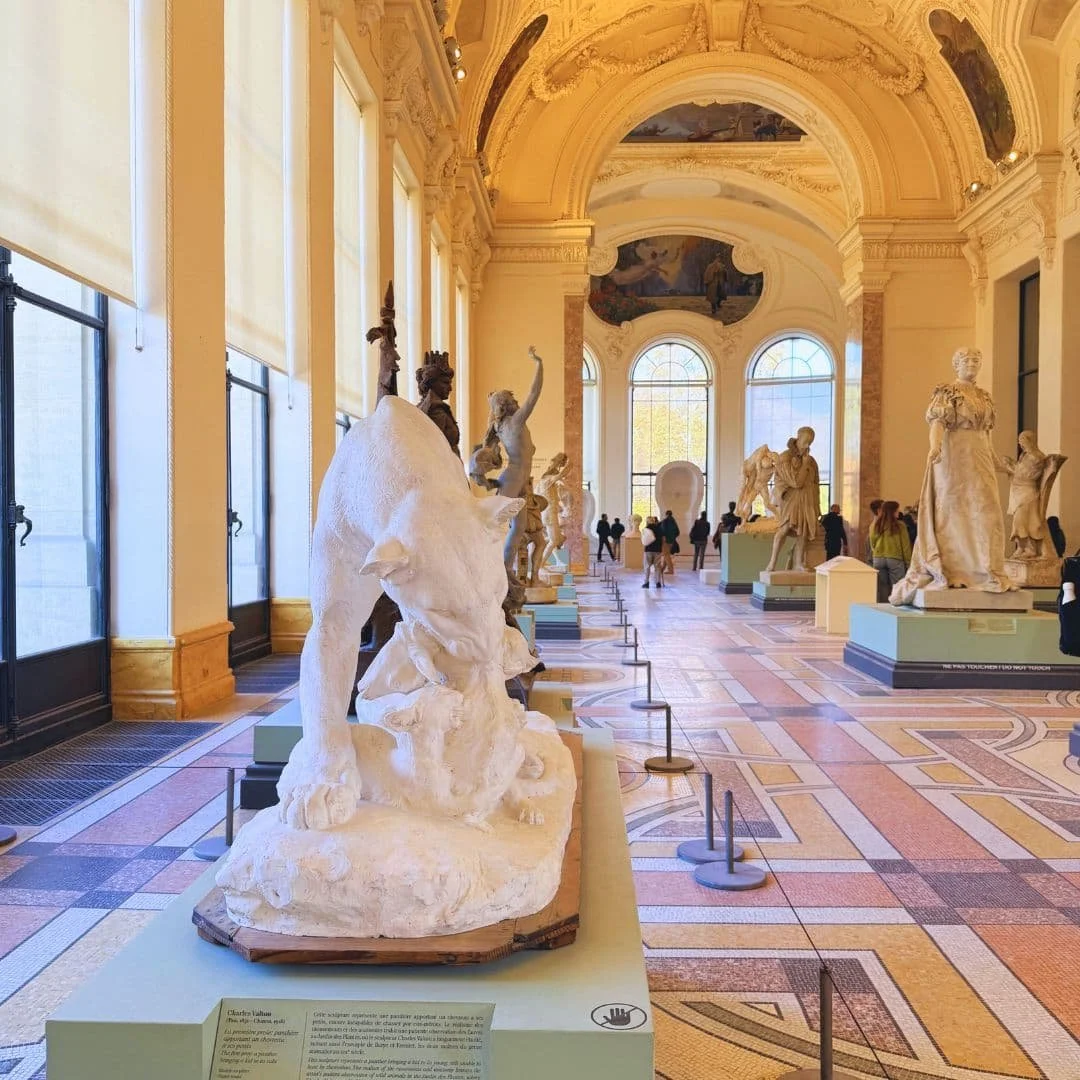
The Petit Palais was built for the 1900 World’s Fair, right across from the Grand Palais, and you will find many different kinds of art there: paintings and sculptures, but also furniture and decorative objects. It is also much calmer than the Louvre or the Musée d’Orsay, especially on weekdays.
What I really love here is the building itself, which is sublime, with its golden gate and its painted ceilings, and above all the garden. It is an inner garden surrounded by columns, very pretty, so take the time to enjoy it, and to take some lovely photos!
Good to know:
Pay attention to the closing time: the permanent collection closes at 6pm. If you see late openings advertised, they don’t apply to the free part of the museum with the permanent collection, only to the temporary exhibitions.
There is a free app in English that guides you through the visit, with a choice of tours, for example the 12 masterpieces or the 30 must-sees.
The restrooms are unisex, with a line most of the day, and from my own experience, this is a bit the weak point of the museum.
After your visit, walk to the Pont Alexandre III, just next door, for a lovely view of the Seine and the Eiffel Tower.
4. Museum of the Liberation of Paris (WWII)
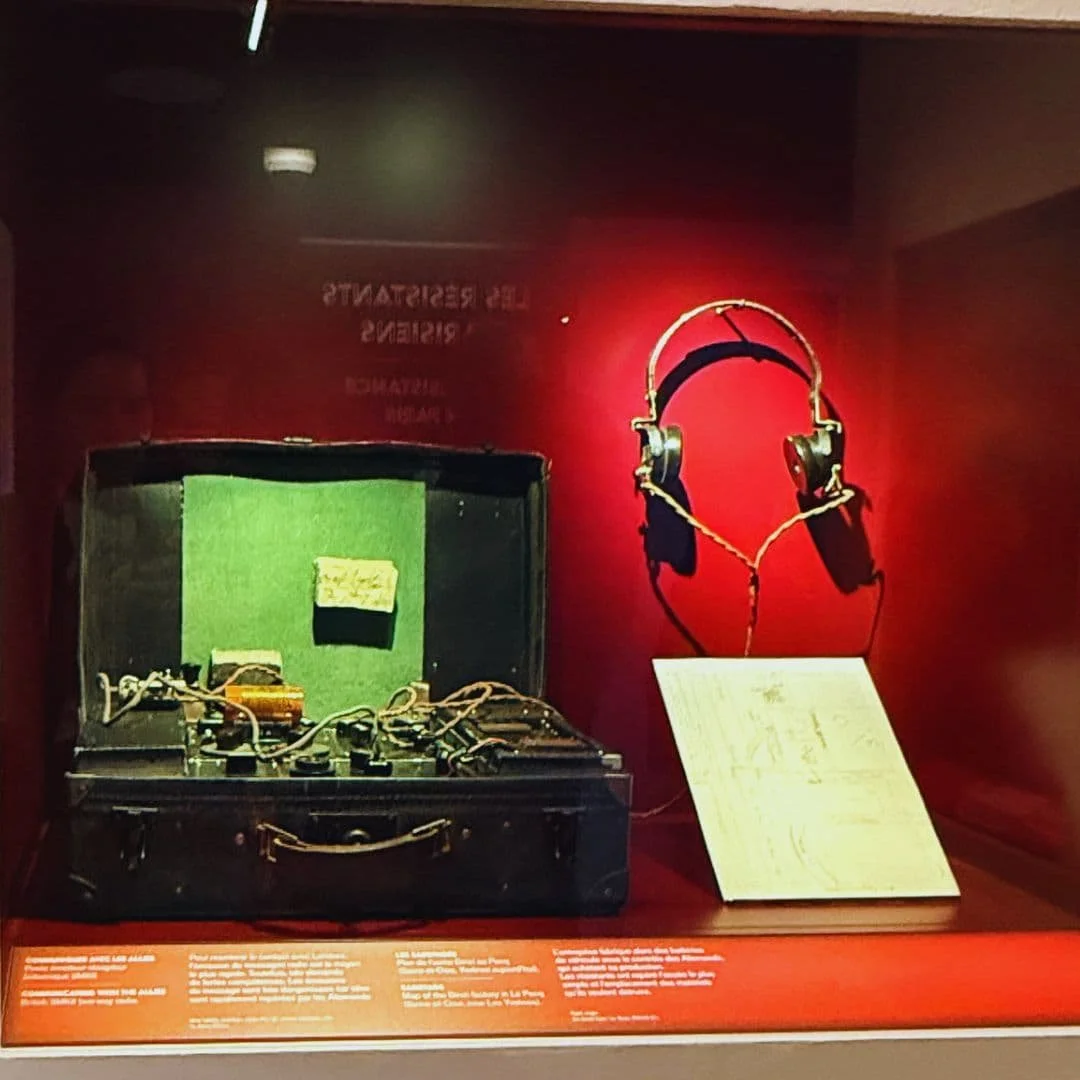
The Museum of the Liberation of Paris tells the story of the Occupation and of the Liberation of Paris in August 1944 (WWII), through the heroes of the French Resistance. It is very detailed, with a lot of text to read, so it is really for people who love history. But it covers a very important part of French history. What makes this museum really special is underground: the bunker where the Resistance directed the liberation of Paris, about 20 meters below the street. You go down around 100 steps, so you need to be in good shape. It is really interesting to see what the bunker looked like at the time, even if it is empty today.
Good to know:
In the morning, you can visit the bunker on your own, with no reservation.
In the afternoon, there are 3 slots for a virtual reality experience in the bunker, and for me it is exceptional! It lasts 45 minutes, it is free and included in the visit, and there is an English version. Places are limited, so ask for your ticket as soon as you arrive at the museum.
The Catacombs are on the same square, Place Denfert-Rochereau, so you can easily combine the 2.
5. Curie Museum, Marie Curie’s Lab
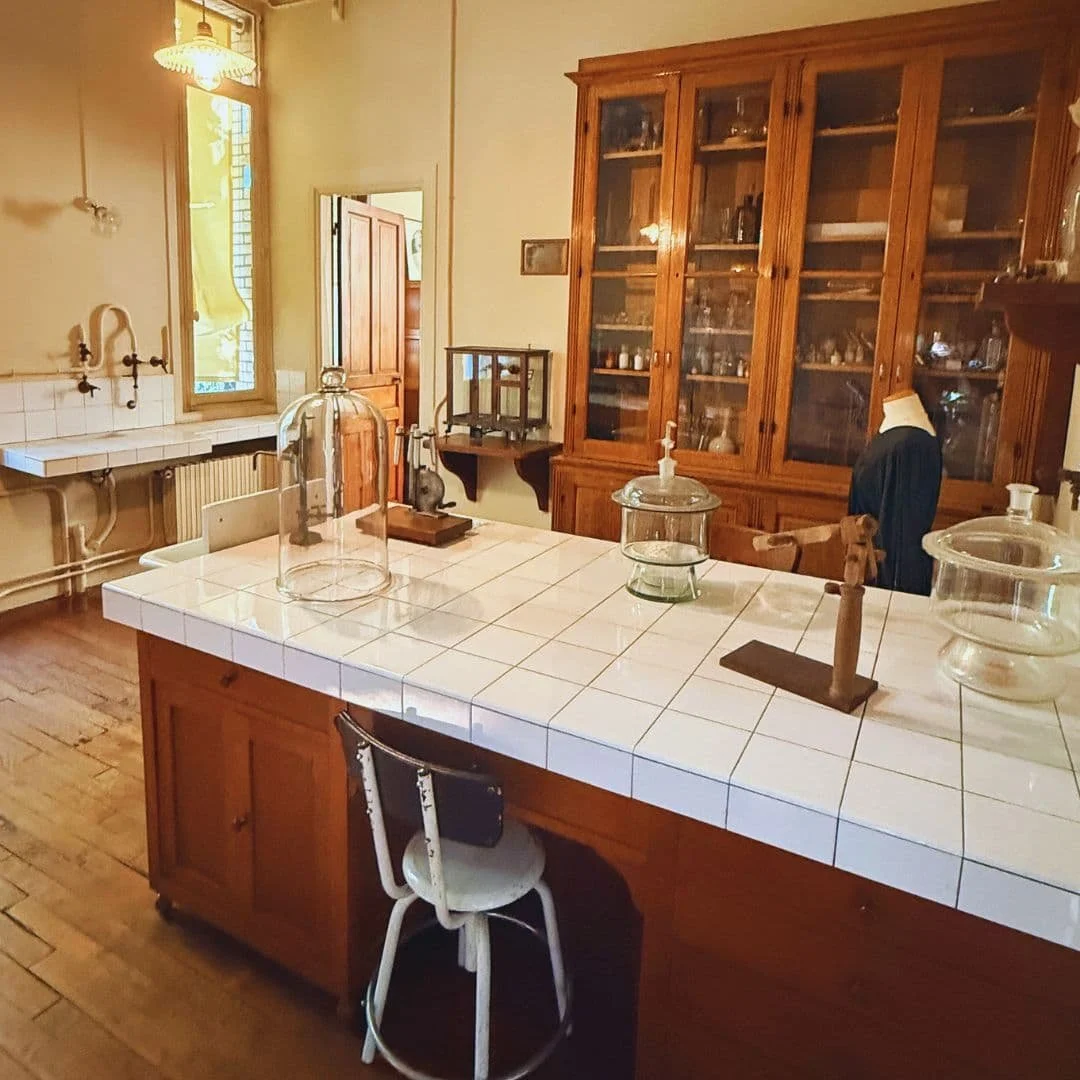
The Curie Museum is in the building where Marie Curie worked, the first woman to win a Nobel Prize (she won two!). It is a very particular museum, very focused on science, and I have to insist on one point: it is very, very small. You can’t go inside her office or her lab, but you get a very complete view of both, and then there is one exhibition room with explanations, very detailed and with a lot of text, so you really need to be interested in the subject.
Several visitors were a bit disappointed because they expected more, so go with the right expectations. For me, it is a very niche museum, and I understand that passionate visitors give it a very good rating, but it is good to know this before you go. If it is a subject you love, it is really worth the visit, and it is quite close to the Luxembourg Gardens.
Good to know:
Only 10 to 15 people are allowed inside at the same time, so sometimes there is a short wait, but since it is a very niche museum, there are not many people anyway.
The museum is open only a few afternoons a week, so check the exact days and hours on the official website before you go.
What International Visitors Want You to Know About Free Museums in Paris
2 things come up again and again in international visitors’ reviews: they are grateful for the free entry, and they are often unsure about what exactly is free.
1. Visitors are grateful to get this quality for free. 38% of the written comments mention the free entry, a little more than the comments about the art itself. Visitors can’t believe they can see this quality of art without paying, and in a city where everything feels expensive, I understand them!
So if you are planning a trip to Paris on a budget, the free museums are a great way to discover different kinds of art without spending money. Of course, they won’t replace a visit to the Louvre or the Orsay Museum, which are really unique museums, but they can help you a lot with your budget. And since you don’t need to book them in advance, they are also a perfect plan B: if you have a gap in your schedule, or if your plans change at the last minute, you can simply decide on the spot to go to one of them.
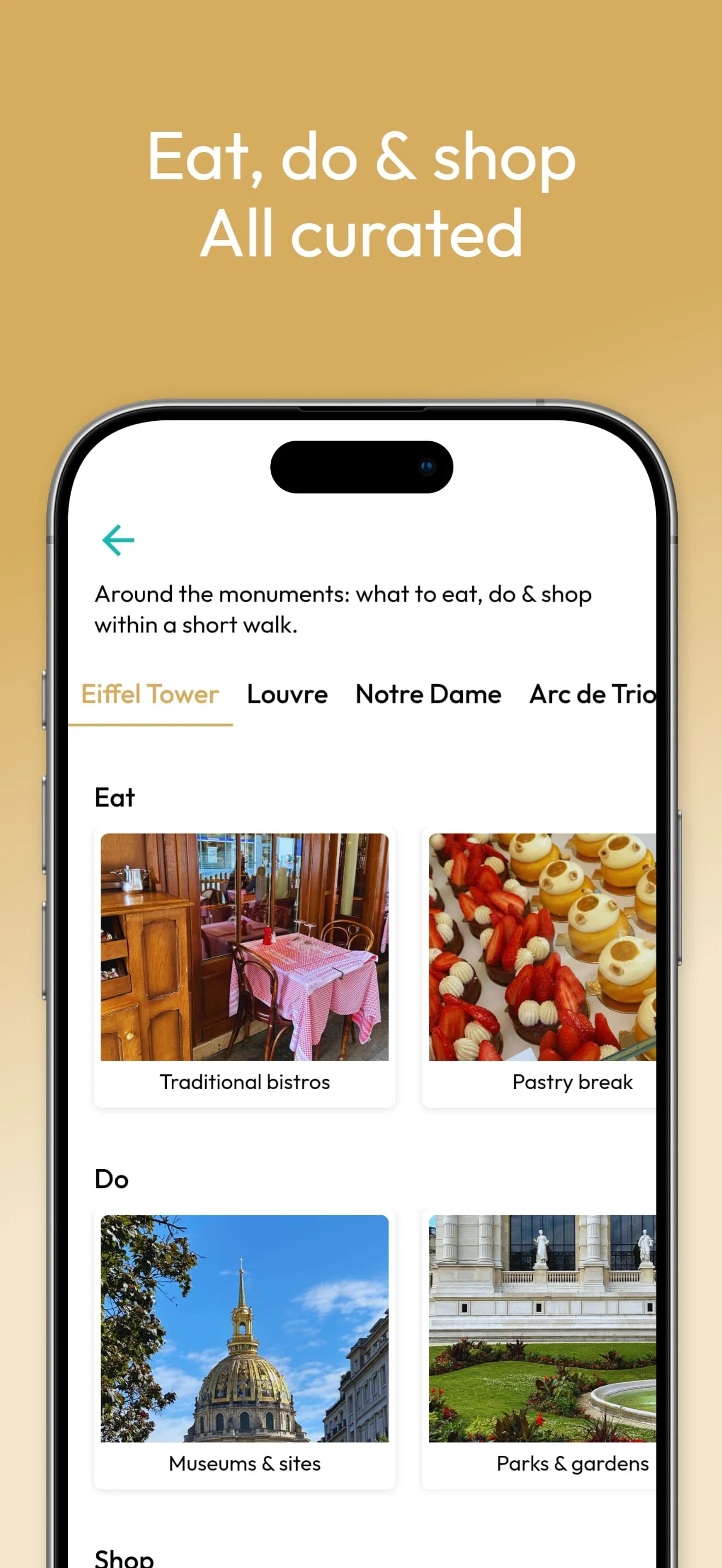
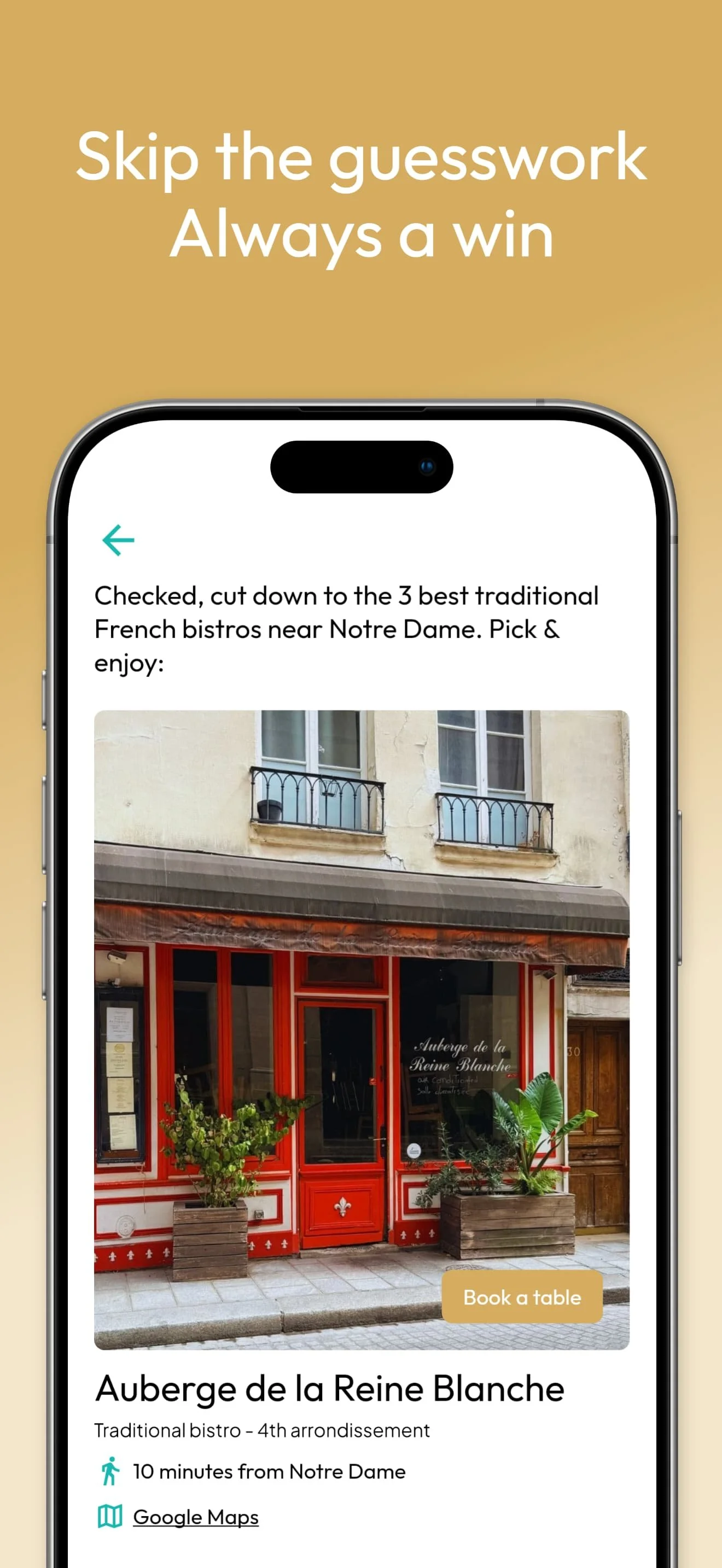
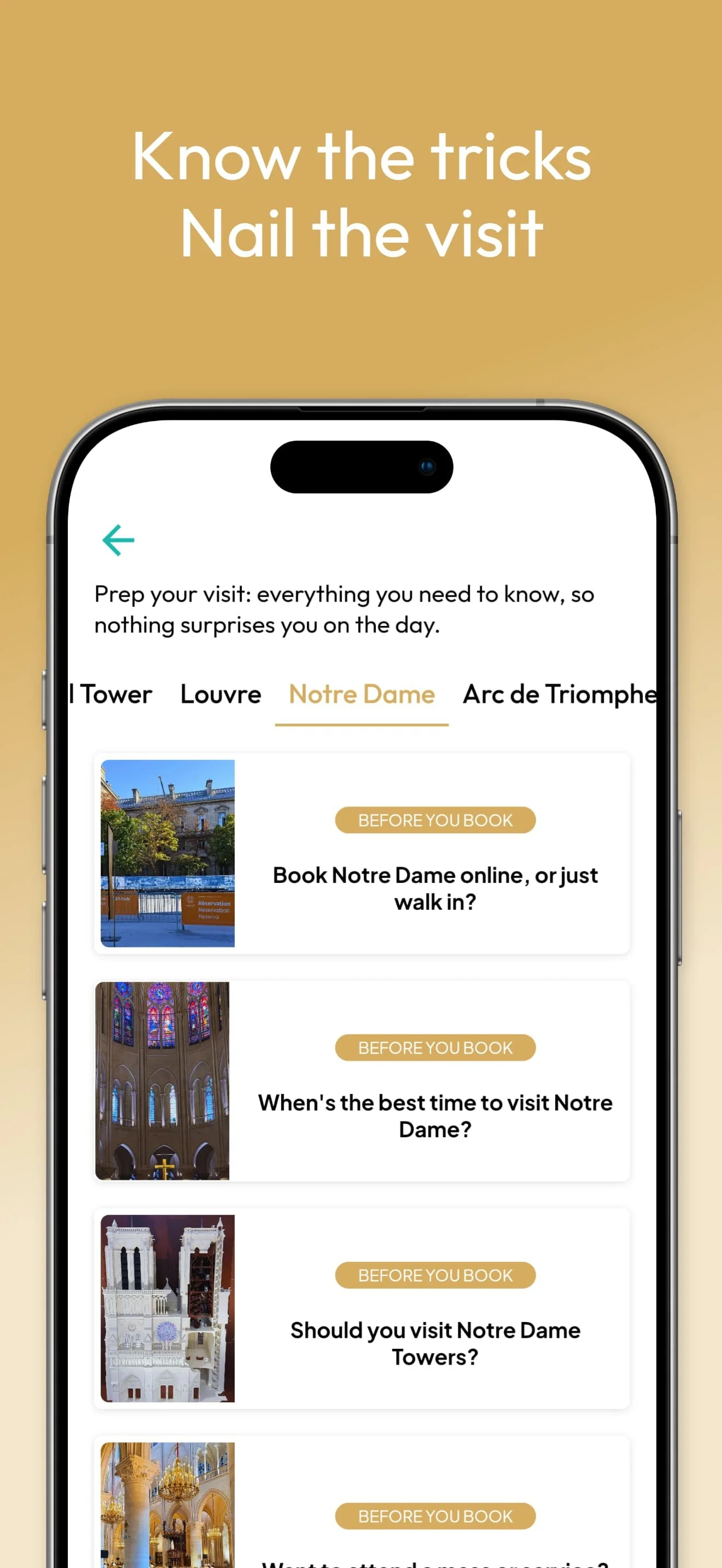
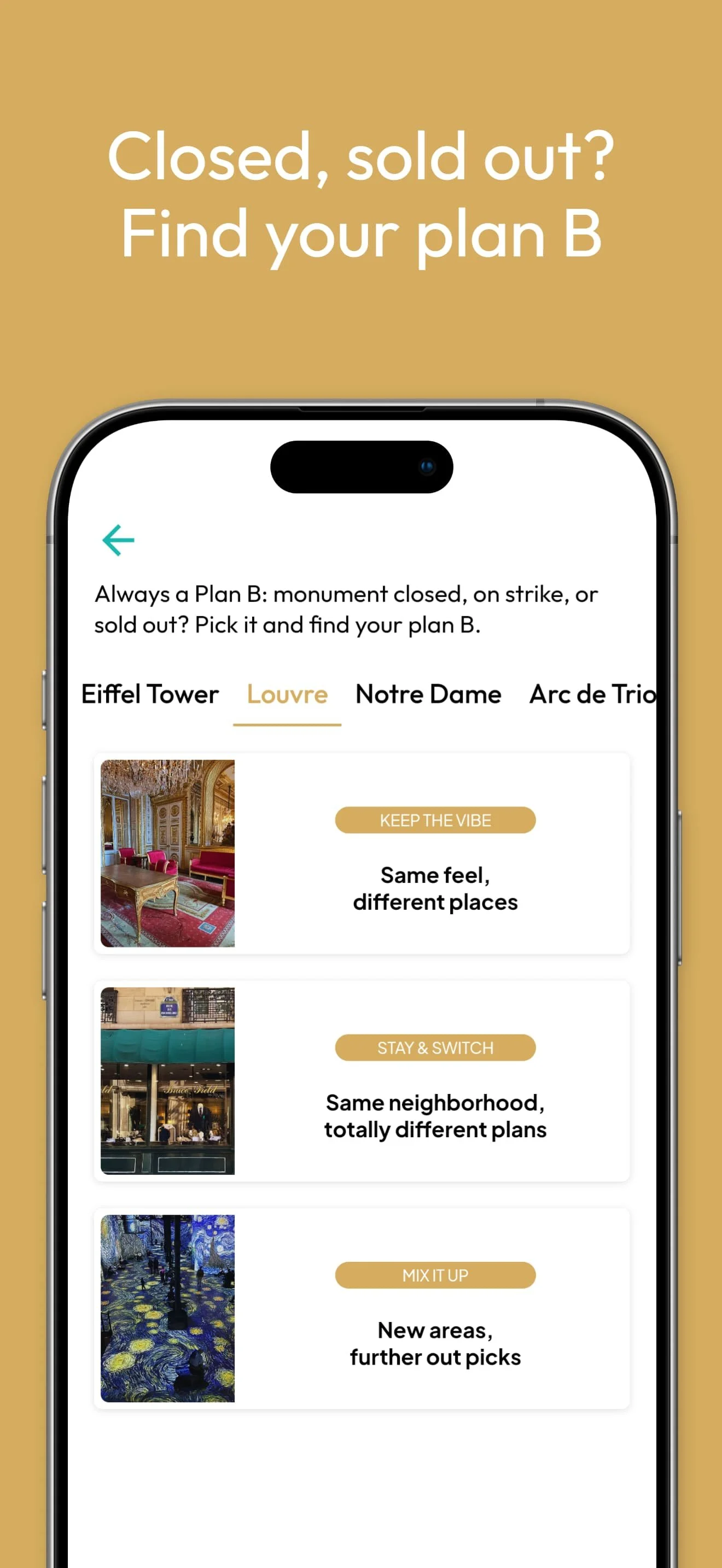
And btw when your plans change, this is where my app, Paris on the Spot, can help you. I created it to share my tips as a Parisian around the main monuments: where to eat nearby, what to do with a free hour, and a plan B when something doesn’t go as planned. It is available on iPhone and Android.
2. Only the permanent collections are free. Free entry also means you don’t need a ticket, and I know it can feel a bit confusing when you arrive. The first line you see is the security check: the staff look inside your bags and you walk through a metal detector. After that, you don’t need to go to the ticket desk, you can walk straight into the museum. If someone tells you that you need a paid ticket, it is because you are heading toward the temporary exhibitions, so just ask where the free permanent collection is, and the staff will show you the way.
There is only one exception: at the Museum of the Liberation of Paris, if you want to do the virtual reality experience in the bunker, you do need to line up at the ticket desk at the entrance. The ticket is free, of course, but the number of slots is limited, so you have to ask for it there.
Your Questions About the Favorite Free Museums in Paris
Do I Need to Book Paris Free Museums?
No, for the permanent collections, which are the free part of these museums, you don’t need to book and you don’t need a ticket. You will have to line up first for the security check, because everyone goes through it, but after that you don’t need to go to the ticket desk. And there is nothing to book online anyway: what you see for booking on these museums’ websites is the temporary exhibitions, which are paid.
Which Museums in Paris Are Free?
Paris has at least 16 free museums.
Some are entirely free: the Curie Museum, the Fragonard Perfume Museum, La Maison Élysée and the Museum of the Legion of Honour. The others have a free permanent collection, and only their temporary exhibitions are paid: the Petit Palais, the Carnavalet Museum, the Museum of Modern Art of Paris, Victor Hugo’s House, the Museum of Romantic Life, the Bourdelle Museum, the Cernuschi Museum, the Cognacq-Jay Museum, the Zadkine Museum, Balzac’s House, the Museum of the Liberation of Paris, the National Archives Museum. The permanent collections are usually quite large, so they already give you a great overview, and you can spend a great time there without paying anything.
Which Free Museum in Paris Should I Choose on a Rainy Day?
For sure, the Carnavalet Museum! It’s big and you can easily spend 2 to 3 hours there, traveling through the whole history of Paris while it rains outside. Since the museum is so big, it is nice to know that there are a few quieter spaces with benches, where you can sit down and take a break. And if you are hungry, there is a restaurant, Joli, a chic bistro where you can have lunch or a drink, and also a few sweet and savory snacks.
Which Free Museum in Paris Should I Choose on a Very Hot Day?
The Petit Palais is the best free museum in Paris on a very hot day, because the rooms are air-conditioned. It’s a very pleasant place to cool down for a while. And in fact, there are quite few places in Paris with air conditioning, especially museums, so it is a really good opportunity!
Which Free Museum in Paris Should I Choose If I Only Have an Hour?
The Bourdelle Museum, where an hour is enough to see the studios, and if the weather is nice, you can also enjoy the garden and its statues.
Methodology of the Paris on the Spot Free Museums Study (2026)
The Detailed Methodology
This ranking is based on the Google ratings that international visitors left on 16 free museums in Paris between January and October 2026.
| What | Number |
|---|---|
| Google reviews collected | 10,521 |
| Free museums in the study | 16 |
| Museums with at least 100 international ratings | 10 |
| International ratings for those 10 museums | 4,785 |
| Written comments read and analyzed | 1,751 |
| Languages of the reviews | 42 |
| Period | January to October 2026 |
Which reviews? I collected all the Google reviews of 16 free museums in Paris posted between January and October 2026, which makes 10,521 reviews in total. The 16 museums are the Petit Palais, the Musée Carnavalet, the Musée du Parfum Fragonard, the Musée d'Art Moderne de Paris, the Maison de Victor Hugo, the Musée de la Vie Romantique, the Musée Bourdelle, the Musée des Archives Nationales, the Musée Curie, the Musée de la Libération de Paris, the Maison de Balzac, the Musée Cernuschi, the Musée Cognacq-Jay, the Musée Zadkine, La Maison Élysée and the Musée de la Légion d'honneur.
Who counts as an international visitor? For each review, I looked at the language of the review and, when it was available, at where the reviewer comes from. I kept the reviews written in a language other than French (4,584 reviews) and the reviews in French from people living outside France (540). I removed the reviews from French residents (3,805, from Paris, from the rest of France or without more detail), and the 1,592 reviews where it was impossible to know anything about the person.
Which museums are in the ranking? I kept only the museums with at least 100 international ratings, so that the averages mean something, which leaves 10 museums out of 16. The Musée Cernuschi (Asian art, next to Parc Monceau) has a very good score of 4.74, but with only 74 international ratings, it stays just below the line, like the Maison de Balzac (75), the Musée Cognacq-Jay (70), the Musée Zadkine (63), La Maison Élysée (29) and the Musée de la Légion d'honneur (28).
How is the ranking calculated? It is the simple average of the ratings out of 5, and every rating counts the same, with or without a comment.
How did I analyze the comments? For the 10 museums in the ranking, 1,751 international ratings come with a written comment. Each comment was translated into English when needed, then sorted into 16 topics (the art, the temporary exhibitions, the building, the garden, the explanations, the size, the crowds, the price, the opening hours, the entry, the staff, the facilities, the café, the shop, the location and the type of visitor), each with a feeling: positive, negative or mixed. The practical tips that visitors share in their reviews were collected the same way. This analysis was done with the help of Claude, the AI assistant made by Anthropic, with a second full check of every comment to correct inconsistencies, and I reviewed the results myself.
How to Quote This Study
Journalists and bloggers are welcome to quote the results of this study, as long as the source is clearly mentioned as “Paris on the Spot Free Museums Study (2026)”, with a link to this page. For press inquiries, interviews or access to the full data, you can contact me at bonjour@paris-on-the-spot.com
Planning a trip to Paris? I made an app for that.