
You Don't Need to See Everything to Have Seen Paris
I was at the Eiffel Tower when I saw them arrive at the second level. A couple. Young, energetic. They looked around. "Wow, beautiful." Two quick selfies. Then straight back to the elevator.
Ten minutes total at one of the most famous monuments in the world. I watched them rush off toward their next stop.
I get it. I did the same thing on my first international trip to New Zealand. Racing from place to place, terrified of missing something, ending each day exhausted. That fear is rational. You've spent thousands of dollars. You might never come back. But here's what that fear costs you: the ability to experience anything fully.
1. The Three Fears Driving You to Rush
That fear comes from three beliefs that feed each other.
"People will judge me if I didn't see X." You're already imagining the conversation back home. "You went to Paris and didn't see the Louvre?"
"I wasted money if I didn't maximize every moment." You spent $4,000 on this trip. Every hour sitting feels like money burned.
"I can't say I've been to Paris if I skip the famous things." There's a checklist in your head. Eiffel Tower, Louvre, Arc de Triomphe, Notre-Dame, Sacré-Cœur. Until you check them all off, you haven't "done" Paris.
These fears are completely understandable. And they're driving you to rush through one of the few cities designed NOT to be rushed. Here's the irony: You're trying to experience Paris by doing the opposite of how Parisians live.
Parisians spend two hours at lunch. Not because they're lazy. Because enjoying the moment IS the point. Americans hear "flâner" (wandering aimlessly) and think it sounds nice but impractical. But flâner is fundamental here. It's how you discover a neighborhood. How you notice details. How you stumble into memorable moments.
Parisians walk everywhere. They move through the city slowly, noticing things along the way. American culture is built around cars and efficiency. Get from A to B fast. That works at home. But in Paris, you end up at the Eiffel Tower for ten minutes because you're already thinking about the next stop. The monuments are beautiful. But the whole point is everything between them. When you try to see everything, you miss the actual experience.
2. What People Actually Remember
Here's what my newsletter readers tell me they remember most. Not the monuments. The unexpected moments. The store they ducked into when it rained. The waiter who made them laugh. The cute street they walked down because construction closed their route. The tourist they met on the metro who recommended a restaurant.
The memories that stick are never the ones you rushed through. Most people rush through the Eiffel Tower. Up, photos, down. What if you took the stairs down? Different views at each level. Human pace. Or the Musée d'Orsay. Everyone rushes to the Impressionists on the top floor. They skip level 0 with the Paris section and 3D city models. They skip level 2 with Art Deco furniture in a reconstituted apartment. Not the famous pieces. But often more memorable because you're not in a crowd.
You won't remember the Mona Lisa. You stood in a crowd, saw it for 30 seconds through other people's phones. But you'll remember the café where you sat for an hour watching the street. The conversation. The pastry you ate slowly. Deep experiences create lasting memories. Surface-level sightseeing creates photos you'll scroll past.
3. Choose How You Want to Experience Each Place
Stop asking "Should I see this?" Start asking "How do I want to experience this?" You don't have to skip the Louvre or Eiffel Tower. You decide what kind of experience you want.
At the Louvre: Everyone "should" see the Mona Lisa. Fine. Go see it. But what next? You could wander aimlessly for two hours, feeling obligated to see everything, leaving exhausted. Or decide: "Mona Lisa, then sculptures because I love sculpture. Then I'm done." Or: "Napoleon's apartments because I love 19th-century history." You choose based on what interests you.
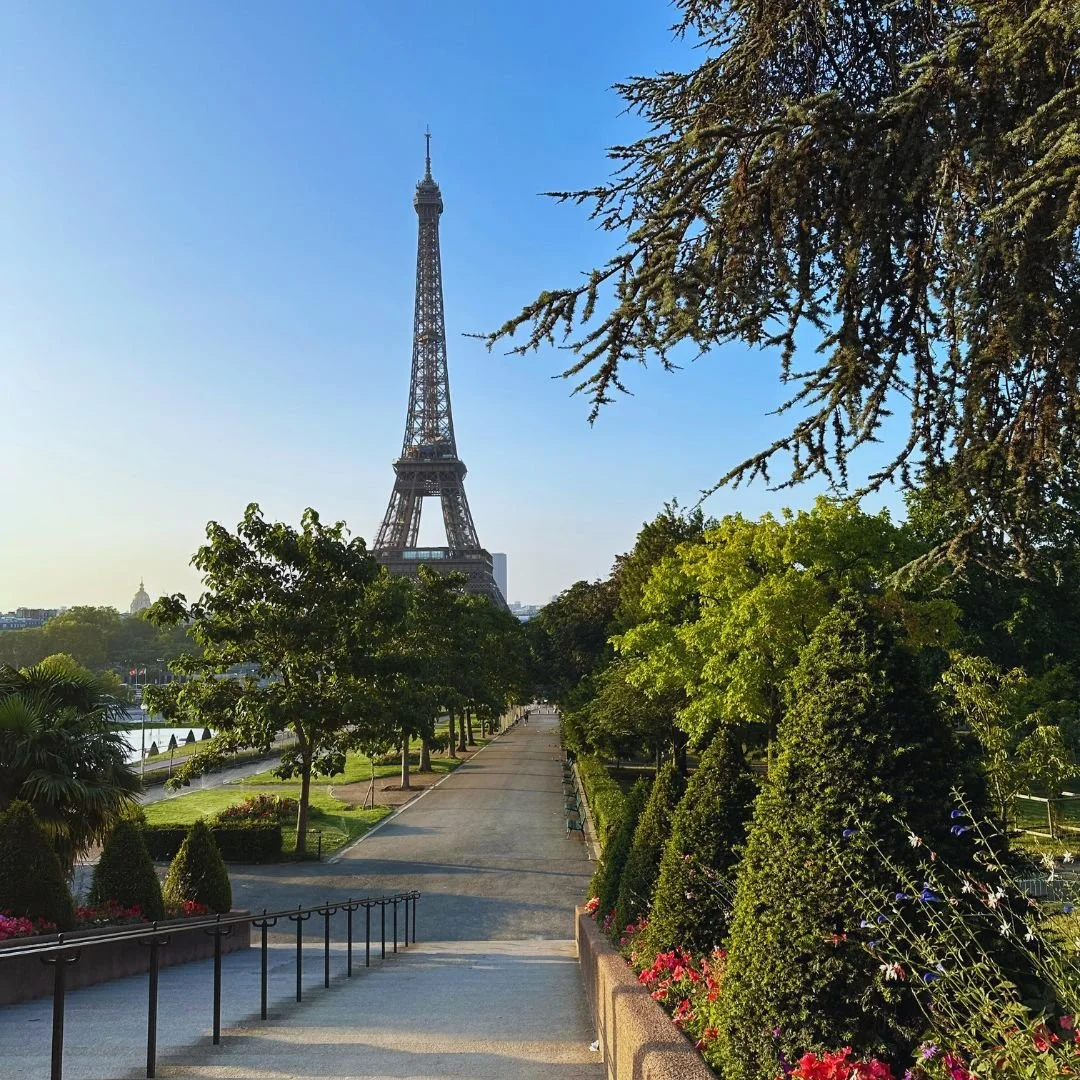
Same with the Eiffel Tower: Is it important to go to the top? Maybe that view is exactly what you want. Or maybe you prefer the view from Arc de Triomphe because you see the Eiffel Tower IN the view. In that case? Walk around the park. Picnic. Take photos. See it sparkle at night. Then go up Arc de Triomphe instead. Both are valid. You choose which one you want.
Ways to experience any monument:
Quick visit for photo and brief look (15-30 min).
Targeted dive picking 2-3 specific things to see well (1-2 hours).
Atmospheric experience for the vibe, sitting and observing (30 min-1 hour).
External appreciation from outside, skipping interior (15 min).
Full immersion taking your time to wander and discover (2-4 hours).
None is "right." Pick based on your energy and interests.
Ask yourself: Do I want the quick moment or the deep dive? What do I actually want from this place? The view? The photo? The history? Do I want to go inside, or is outside enough? What's my energy level going to be here? How much time feels right for THIS place?
4. What It Actually Looks Like
Seeing Paris isn't about how many monuments you photograph. It's about the moments you notice. Here's what a day with breathing room looks like:
📍 Breakfast at Le Flore en l'Île. Linger. Watch people. (1+ hour)
📍 Walk Seine river banks. Wander. Stop when something catches your eye.
📍 Notre-Dame area. Explore the exterior, the square. (45 min)
📍 Saint-Chapelle. Take your time with the stained glass. (45 min)
📍 Lunch at Les Deux Palais. Long meal. This IS an activity. (1.5-2 hours)
📍 Invalides museum. Napoleon's tomb. Your pace. (2-3 hours)
📍 Seine river cruise. Sit. Rest. Watch. (1 hour)
📍 Dinner at Crêperie des Pêcheurs. Good food, no agenda after.
Notice: time to sit at breakfast. Time to wander. A long lunch. A river cruise where you're just observing. This isn't rushing monument to monument.
Something that can help: bring a small notepad or buy one day 1. Each night, write down the moments that stuck. The waiter who made you laugh. The light on the Seine. The conversation at lunch. Writing it down forces you to reflect on what mattered. "Went to the Louvre" isn't a moment. "Sat in the sculpture garden for 20 minutes watching other visitors" is. And it shifts your attention the next day. When you know you're going to write about your day, you start looking for moments worth noting.
5. Planning This
Here's the thing: you still need to know what's around each monument. You've scheduled the Louvre for morning. But what's nearby for lunch? What's worth doing if you finish early?
That's where Paris on the Spot helps. It's organized by monument and neighborhood. Planning around the Louvre? Here are restaurants nearby. Here's what else is worth your time. You're still planning your own trip. Just with better information organized how you need it.
And once you're there, write down those moments each night. Choose how you want to experience each monument. Build breathing room. You don't need to see everything to have truly seen Paris. The pauses aren't wasted time. They're where the memories happen.