The Secret To Getting Lost In Paris
If you are the kind of traveler who plans her Paris trip on a spreadsheet, the advice "just get lost in the streets" is one you have heard more than enough times, and it can feel like a small reproach to the way you actually like to travel. You can let that go. The spreadsheet stays, you just leave a few empty windows in it on purpose, for slow wandering. A little prep on the neighborhoods around each of your big stops, and those empty windows tend to become the parts of the trip you actually talk about when you get home.

Getting Lost Doesn't Mean Winging it
There is a real difference between getting lost in Le Marais on a Wednesday morning, and getting lost coming out of Gare du Nord on a Sunday night. The first leads you to a small cobbled street, a café terrace in the sun, a vintage shop you did not know to look for, a croissant that reminds you why people write about French pastry. The second leads you to forty minutes of confusion, the wrong metro line, and a certain level of stress.
The travelers who make getting lost look romantic have almost always picked the neighborhood ahead of time. Le Marais, Saint-Germain, the Canal Saint-Martin, the streets around the Panthéon, the village feel of Montmartre above the tourist staircases, all of these reward unstructured time, because the streets, the small shops, the cafés, the inner courtyards, are all worth noticing on their own. A random suburban metro stop or the wholesale fabric district of Sentier do not reward wandering in the same way, and if you get lost there, you mostly just lose time.
So the advice ‘get lost in Paris’ is half-truthful. The fuller version is something like ‘get lost in the right parts of Paris, with enough information in your pocket that wandering feels safe instead of stressful’. That is a much less romantic sentence, and it is the one that actually works!
What You Actually Need To Wander Without The Stress
Picture the scenario. You have just walked out of the Louvre, your dinner is at 8 pm, it is 6:30 pm, you are tired but not exhausted, and you have 90 minutes ahead of you. Without preparation, you are likely to stand there opening Google Maps, debating whether to just go back to the hotel. With a little preparation, you already know where you can stroll, because you already know the shape of the next hour. That is the kind of wandering people actually remember!
Concretely, here is how I approach it for each major stop on an itinerary:
Identify 2 or 3 areas within a 10-minute walk of the monument you are visiting, and read briefly about each one before your trip. For example, Le Marais has vintage shops, falafel, and small galleries. Saint-Germain has historic cafés and bookshops. Knowing that in advance is what allows you to actually see those things when you walk through, rather than walking past them because your mind is busy deciding where to go.
It also helps to know where the closest metro stations, just the 2 or 3 that matter for your next stop. And it helps a lot to build in a time buffer. If your dinner is at 8, aim to arrive in the dinner area by 7:30, which gives you 20 or 30 minutes of margin to wander on the way without the low-level panic that you might be late. The formula is simple: Know where you are + Know where you're going next + Fill the middle with discovery.
The last piece is the hardest one to put on a checklist, and the most important. Trust yourself to notice. The bakery with the line out the door (almost always a good sign in Paris), the small square where locals are playing pétanque, the bookshop with a cat in the window... You will only see those things if you are relaxed, and you will only be relaxed if the structure of the rest of the day is no longer a question in your head.
2 Options To Build Your Trip Around Discovery
There is, honestly, some pre-trip homework involved in this approach. Researching neighborhoods, marking metro stations, reading about what each area is like, organizing it all in a format you can use while jet-lagged, and keeping it accessible on your phone, takes real time. If you enjoy doing the work yourself (like me!), please do, it is a genuinely nice part of preparing the trip.
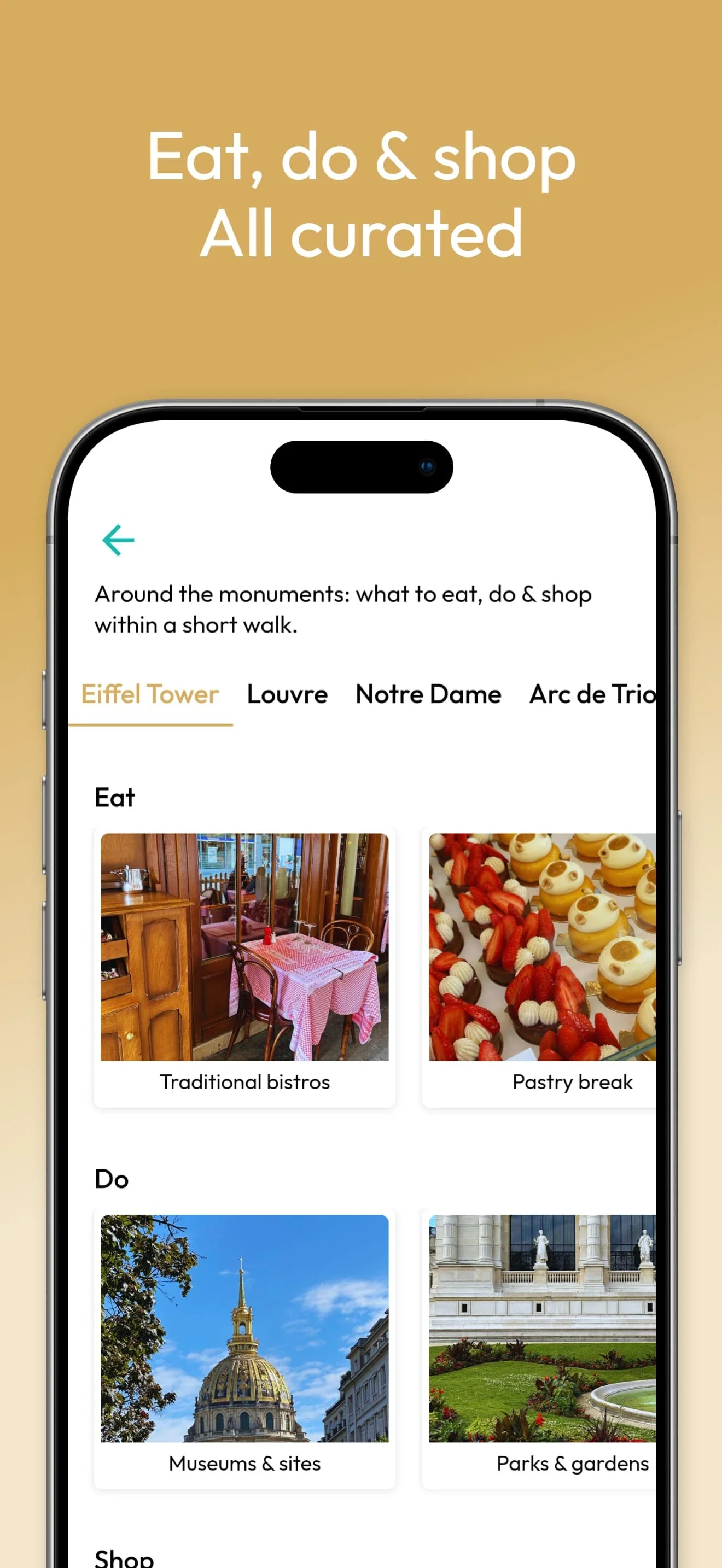
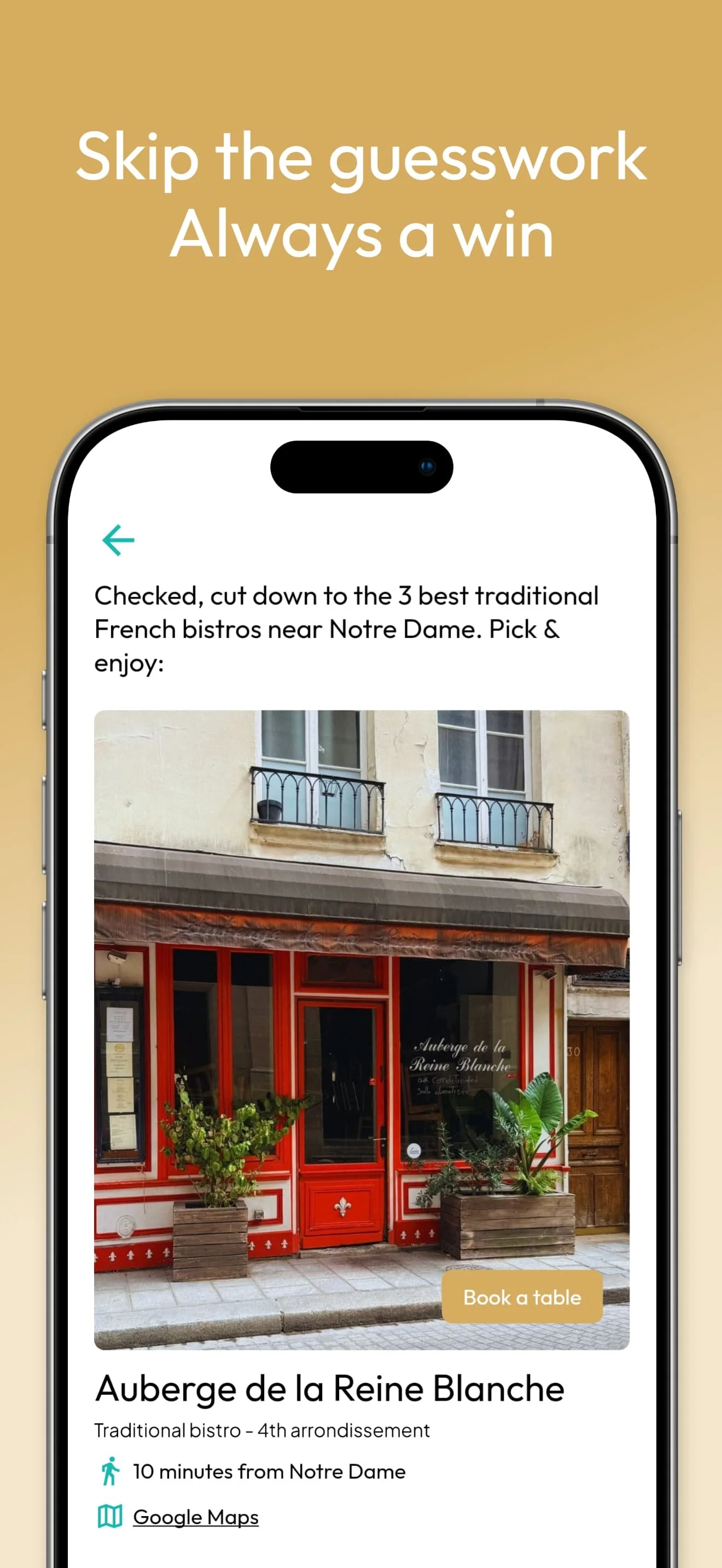
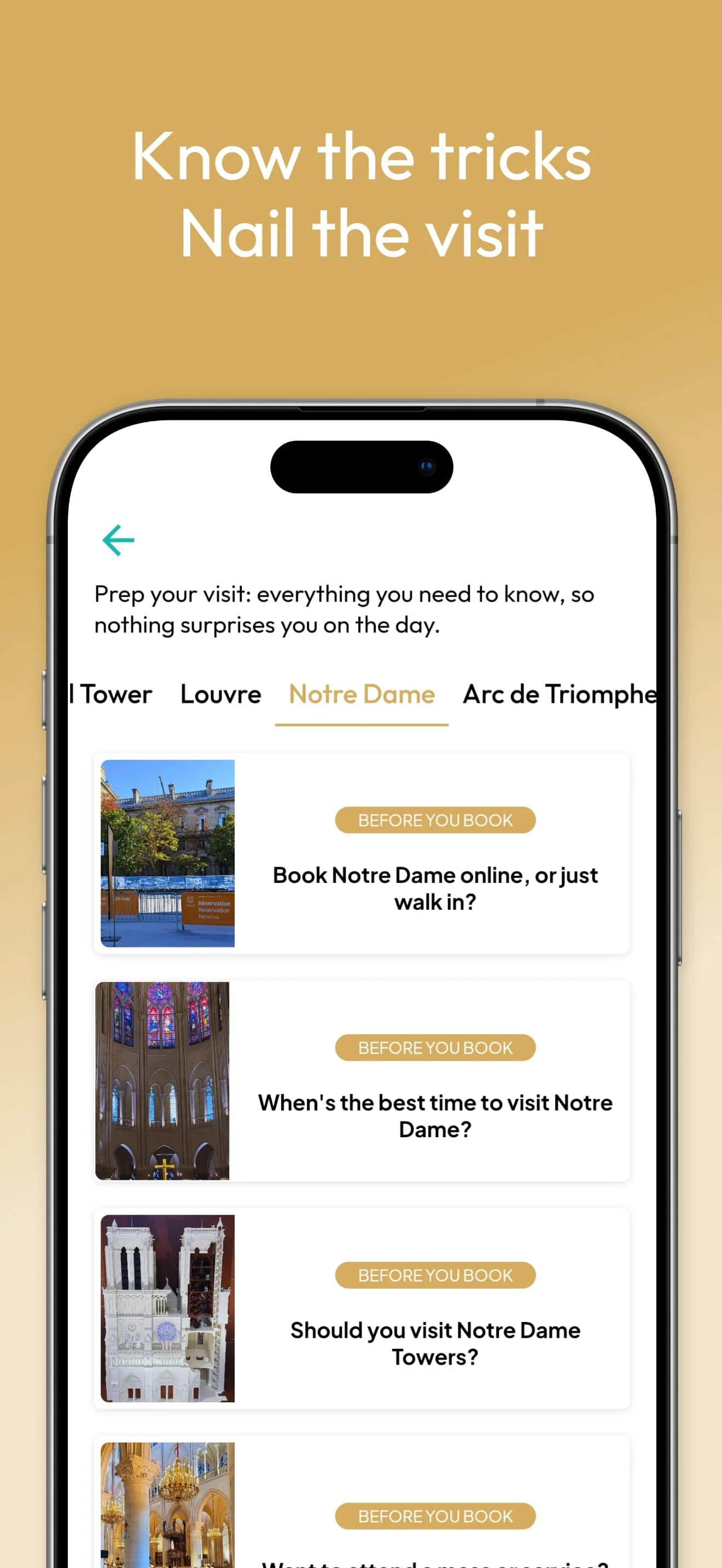
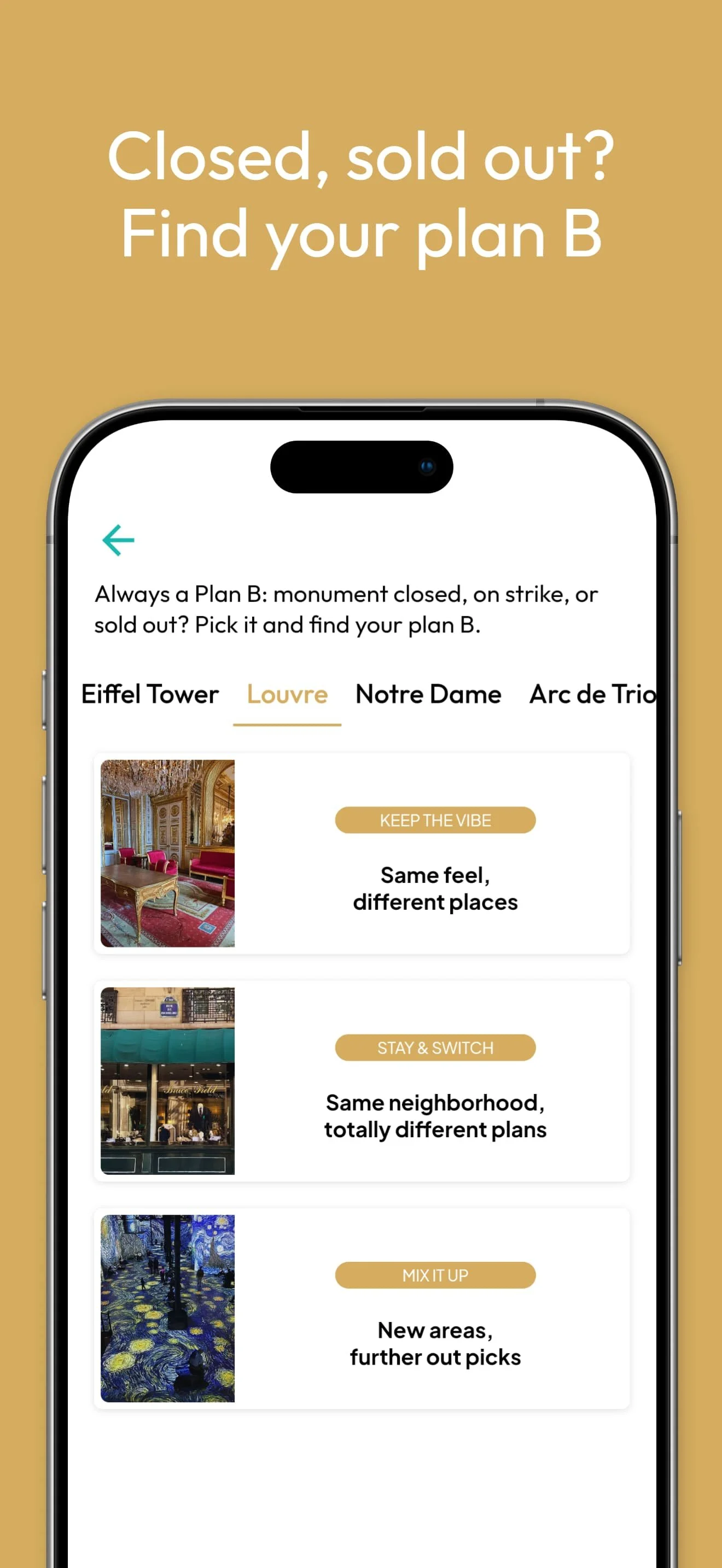
If you would rather have it pre-organized, this is exactly what Paris on the Spot app is built for. The app is structured by monument, so when you walk out of the Louvre at 6:30 pm with 90 minutes ahead, you open it, you tap the Louvre, you see the small things worth doing nearby, like the shops, the cafés… You are still planning your own trip, you just are not starting from scratch every time a window opens up.
Bref, the romantic version of Paris wandering is real, it mostly requires choosing the right places to wander, knowing enough about each one in advance to recognize what you are looking at, and giving yourself the time buffer to actually slow down once you are there.
PS: if this blog post was helpful, you might also like the article on Why you don’t need to see everything to have seen Paris, the closest sibling to this blog post!
Planning a trip to Paris? I made an app for that.